Teeth Whitening in Lusail, Qatar

Brighter — but still you. Doctor-led whitening designed for a natural, refined finish.

Brighten your smile — without losing its character.

Teeth Whitening

Considering professional teeth whitening in Qatar? At Platinum Medical Center in Lusail, we assess your teeth, gums, existing restorations and sensitivity before discussing in-clinic whitening, dentist-guided take-home trays or a combined approach. Your plan should reflect your starting shade, goals and suitability.

Book a Whitening Consultation

The essentials

Teeth whitening, in brief

Professional teeth whitening lightens the natural colour of your teeth with a peroxide gel, applied in the clinic, worn at home in custom-made trays, or both. At Platinum Medical Center in Lusail, a dentist first checks your teeth, gums, existing fillings and crowns, and any sensitivity, then recommends the method and a realistic shade. In-clinic whitening takes one visit, home whitening usually takes about two weeks, and results typically last from several months to around three years.

Options
In-clinic whitening, custom take-home trays or both, and internal whitening for a single dark tooth
In the clinic
One visit, usually about 60 to 90 minutes
At home
Custom trays worn daily, usually for about 2 weeks
Works on
Natural teeth; crowns, veneers and fillings keep their colour
Comfort
No anaesthetic needed; any sensitivity is usually brief
Results last
From several months to around 3 years, longer with top-ups
Suitable for
Adults with healthy teeth and gums
Where
17th Floor, QIG Tower, Lusail, for patients across Lusail, Doha and Qatar

Medically reviewed by Dr. Ahmed Wael Seyam, Cosmetic & Restorative Specialist ·

Our approach

A Tailored Approach

Whitening works best on healthy teeth and stable gums. If there’s active decay, inflammation, or significant sensitivity, we may recommend stabilising care first — such as general dentistry, gum care, or restorative options like composite fillings. If your goals are more about shape or symmetry, we’ll advise whether a structured plan (like dental veneers or composite bonding) is more appropriate.

Treatment options

Which whitening treatment is right for you?

There are four professional ways to whiten teeth. Your dentist recommends one after checking what is causing the discolouration, the health of your gums and how sensitive your teeth are.

I

In-clinic whitening

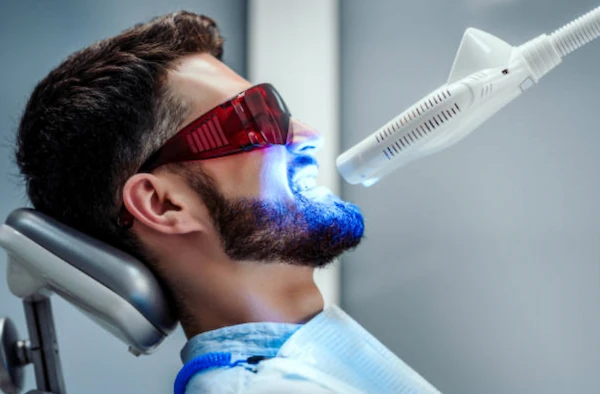
A clinician-supervised session designed for fast, controlled brightening. We protect gums, apply professional-grade gel, and monitor comfort — aiming for an even lift. It usually takes one visit of about 60 to 90 minutes.

SuitsA noticeable change in a single visit, for example before an occasion

II

Take-home whitening trays

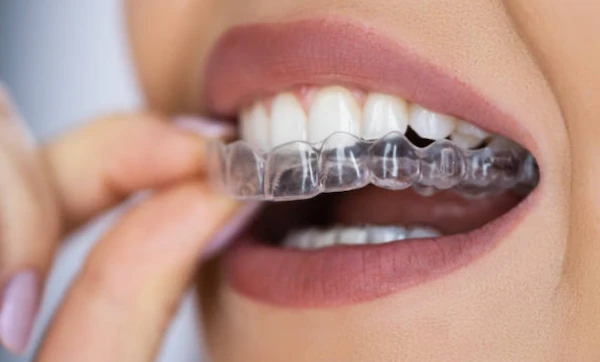
Custom trays allow gradual whitening at home with professional guidance. Ideal for patients who prefer a slower approach — and for future top-ups. The trays are made from a digital scan and worn with a dentist-prescribed gel, usually for about two weeks.

SuitsA gradual change, sensitive teeth and easy top-ups

III

Combined whitening

An in-clinic session to start, followed by a short course with home trays to deepen and even out the colour. You keep the trays for top-ups.

SuitsThe most noticeable change, or stubborn staining

IV

A single dark tooth

A tooth that has darkened after a root canal treatment or an old knock can be whitened from the inside, known as internal whitening, usually over a few short visits.

SuitsOne tooth darker than its neighbours

If your concern is surface staining or tartar, ask whether professional teeth cleaning should come before whitening; cleaning and whitening address different concerns. Considering shape refinement too? Explore composite bonding or a structured veneers plan.

Compare

In-clinic whitening, home trays or shop products?

Professional whitening works faster and more predictably than shop products, because a dentist checks your teeth first, chooses the strength of the gel and protects your gums.

Fastest

In-clinic whitening

The gel
Professional strength, applied by your dentist
Time
One visit, about 60 to 90 minutes
Your gums
Protected with a barrier during treatment
The change
Noticeable straight away
Sensitivity
More likely, usually for a day or two
Top-ups
Another visit, or home trays
Gradual

Take-home trays

The gel
Lower strength, prescribed by your dentist
Time
Daily, usually for about 2 weeks
Your gums
Custom trays keep the gel on the teeth
The change
Builds day by day, often very evenly
Sensitivity
Usually milder, and you can pause
Top-ups
Reuse the same trays
Over the counter

Shop products

The gel
Lower-strength strips, or whitening toothpastes that polish
Time
Weeks of regular use
Your gums
One-size strips can irritate the gums
The change
Slower and less predictable; toothpastes mainly remove surface stain
Sensitivity
Possible, especially with overuse
Top-ups
A whitening toothpaste can help maintain a professional result

Read in-clinic versus home whitening for a fuller comparison. Charcoal powders and home remedies such as lemon juice or baking soda can wear enamel and are best avoided.

Brighter, but still unmistakably yours.

The journey

What happens during teeth whitening?

Most plans take one visit in the clinic, about two weeks at home, or both. Your dentist gives you a personal plan after your assessment.

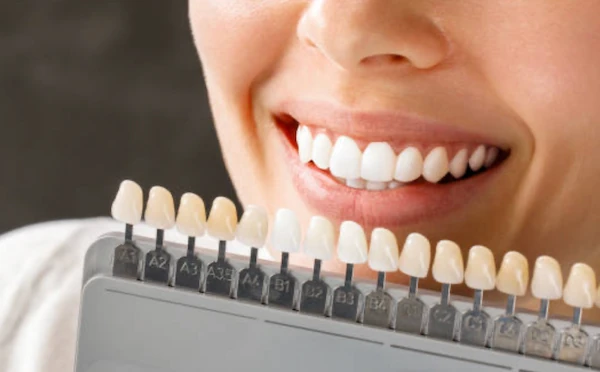
  1. Teeth whitening assessment and shade planning First visit

    Assessment and shade planning

    We confirm suitability, review sensitivity and gum health, and set realistic shade goals. Planning avoids over-whitening and supports a natural, even finish. Your starting shade is recorded so the change can be measured.

  2. If needed

    Cleaning and repairs first

    Tartar and surface stain are removed, and decay, leaking fillings or gum inflammation are treated before whitening, so the gel works evenly and comfortably.

  3. In-clinic teeth whitening with the gums protected About 60 to 90 minutes

    Whitening in the clinic

    Your lips and gums are protected, then a professional-strength gel is applied to the teeth in timed rounds while your comfort is monitored. You see the change before you leave.

  4. Custom take-home whitening trays About 2 weeks

    Whitening at home

    Your custom trays are made from a digital scan. You wear them with the prescribed gel for the time your dentist sets, during the day or overnight, and pause and call us if your teeth become sensitive.

  5. Teeth whitening review and aftercare After whitening

    Review and aftercare

    Your new shade is checked against your starting shade. For the first 48 hours, avoid strongly coloured food and drink; after that, short top-ups with your trays keep the result bright.

Read the teeth whitening consultation guide.

Results

How white will my teeth get, and how long does it last?

Whitening lightens your teeth’s own colour rather than covering it, so the result depends on your starting shade and the type of staining. Yellow tones usually respond well; grey or brown staining, for example from some antibiotics taken in childhood, responds more slowly and may need a longer course.

I

Straight after

Teeth can look a little whiter immediately after a session, then settle over the next few days as they rehydrate. The final shade is judged after that.

II

How long it lasts

Usually from several months to around three years. Coffee, tea, karak, smoking and shisha shorten it; careful cleaning and occasional top-ups extend it.

III

Keeping it bright

Short top-ups with your trays when advised, regular hygiene and Airflow visits, and rinsing with water after coloured drinks.

Fillings, crowns and veneers

Natural Teeth and Existing Restorations

Whitening lightens natural teeth. Existing crowns, veneers and tooth-coloured fillings need separate shade planning because they will not whiten in the same way. Tell your dentist about restorations visible in your smile before choosing a shade goal.

If a visible filling, crown or veneer needs to match, it is usually best to whiten first and replace the restoration one to two weeks later, once the new shade has settled and the enamel is ready for bonding.

Planning veneers or a Hollywood smile? Whitening first sets the shade they will match. Having braces or Invisalign? Whitening is usually done once treatment has finished.

Comfort and aftercare

Does teeth whitening hurt?

Whitening does not need an anaesthetic. The most common side effect is temporary sensitivity: short, sharp twinges, especially with cold drinks, for a day or two after a session. It is more likely if your teeth are already sensitive or your gums have receded.

I

Before

Mention any sensitivity at your assessment. Your dentist may suggest a sensitivity toothpaste for a week or two beforehand.

II

During

Temporary sensitivity or gum irritation can occur. Follow your dentist’s instructions and contact the team if symptoms persist or concern you. At home, sessions can be spaced out or paused.

III

The first 48 hours

Choose light-coloured food and drink. Avoid coffee, tea, karak, cola, berries, curry and tomato or soy sauce, and avoid smoking and shisha.

Read how to prevent sensitivity after whitening.

Suitability

Who is suitable for teeth whitening?

Whitening suits most adults with healthy teeth and gums whose teeth have yellowed or darkened over time.

Usually suitable

  • Adults with healthy teeth and gums
  • Yellowing from age, coffee, tea or smoking
  • A single tooth that has darkened after a root canal treatment
  • Anyone planning bonding or veneers who wants to set the shade first

Wait, or choose another option

  • Children and teenagers, whose teeth are still developing
  • Pregnancy and breastfeeding, as a precaution
  • Decay, leaking fillings or gum disease, which are treated first
  • Very sensitive teeth or exposed roots, which need a gentler plan
  • Front teeth that are mostly crowns, veneers or large fillings

If whitening cannot reach your goal, composite bonding or veneers can change both the colour and the shape of teeth.

Safety

Is teeth whitening safe?

Used as directed under a dentist’s supervision, whitening is considered safe for healthy teeth and gums. The most common side effects are temporary sensitivity and gum irritation, which settle within days once treatment stops. White patches on the gums, a sore throat, or white spots on the teeth that look brighter for a day or two can also occur.

Problems are more likely with overuse, poorly fitting trays and strong products bought online or applied outside a dental clinic. Your dentist explains the risks that apply to you before treatment.

Your treatment plan

What affects the cost of teeth whitening in Qatar?

Whitening is planned individually, so the fee depends on the method and what your teeth need first. You receive a personalised treatment plan, including fees, after your assessment.

  • The method: in-clinic whitening, take-home trays, or both
  • Custom trays and the amount of whitening gel needed
  • Any cleaning, fillings or gum treatment needed first
  • Internal whitening for a single dark tooth
  • Top-up gel to maintain the result
  • Replacing visible fillings or crowns to match the new shade

Whitening is usually treated as cosmetic by insurers, so check your policy before you start.

Your consultation

Questions for your whitening consultation

I

Which method suits my teeth and goals?

Discuss in-clinic whitening and dentist-guided trays, including how each would fit your assessment and routine.

II

How do existing restorations affect the plan?

Ask how crowns, veneers or fillings may affect the appearance of your smile after whitening.

III

How should sensitivity be managed?

Mention existing sensitivity and ask for preparation, use and aftercare instructions specific to you.

IV

What shade change is realistic?

Ask what change may be achievable from your starting shade, what limitations apply and when results should be reviewed.

Your specialist

Your cosmetic dentist

Dr. Ahmed Wael Seyam, Cosmetic and Restorative Specialist at Platinum Medical Center

Cosmetic & Restorative Specialist

Dr. Ahmed Wael Seyam

Dr. Ahmed leads smile-makeover treatment at Platinum, including whitening, composite bonding and porcelain veneers, with a focus on natural shade and translucency so that whitened teeth and new restorations blend.

  • European Master’s Degree, Universitat Internacional de Catalunya, Barcelona
  • Bachelor’s Degree in Oral and Dental Medicine, Cairo University
  • Advanced course in natural layering with composite, London, 2024
  • At Platinum Medical Center in Lusail since 2022

View Dr. Ahmed’s profile

Questions

Teeth whitening FAQ

How long does teeth whitening last?

Usually from several months to around three years. Coffee, tea, karak, smoking and shisha shorten the result, while careful cleaning and occasional top-ups with your trays help it last longer.

Is teeth whitening safe?

Yes, for healthy teeth and gums, when it is done or supervised by a dentist and used as directed. The most common side effects, sensitivity and gum irritation, are temporary.

Does whitening damage enamel?

Professional whitening used as directed is not considered to damage healthy enamel. The real risks come from overuse, strong products bought online, and abrasive or acidic home remedies such as charcoal, lemon juice or baking soda.

Does teeth whitening hurt?

It does not need an anaesthetic. Some people feel short, sharp twinges for a day or two afterwards, especially with cold drinks. A sensitivity toothpaste and spacing out sessions help.

Which is better, in-clinic or home whitening?

Neither is better for everyone. In-clinic whitening gives a noticeable change in one visit, while home trays work gradually and are often gentler on sensitive teeth. Many people combine the two.

How white can my teeth get?

Whitening lightens your teeth's own colour, so the result depends on your starting shade and the type of staining. Yellow tones usually respond well, while grey or brown staining responds more slowly. Your dentist agrees a realistic shade goal with you.

Will whitening work on crowns, veneers or fillings?

No. Whitening changes natural tooth colour only. If visible restorations need to match, they are usually replaced after whitening, once the new shade has settled.

Is laser teeth whitening better?

Laser or light-activated whitening uses the same kind of peroxide gel, with a light that some systems use to speed it up. The gel does most of the work, so the right strength, gum protection and timing matter more than the light.

What can I eat and drink after teeth whitening?

For the first 48 hours, choose light-coloured food and drink, and avoid coffee, tea, karak, cola, berries, curry, and tomato or soy sauce, as well as smoking and shisha. After that, rinsing with water after coloured drinks helps.

Can I whiten my teeth if they are sensitive?

Often, yes, with a gentler plan: home trays with a lower-strength gel, a sensitivity toothpaste beforehand and breaks between sessions. Exposed roots or worn enamel are checked first.

Can one dark tooth be whitened?

Yes. A tooth that has darkened after a root canal treatment or an injury can often be whitened from the inside, known as internal whitening, over a few short visits. If that is not enough, a veneer or crown can match it to its neighbours.

Should I have a cleaning before whitening?

Often, yes. Removing tartar and surface stain first lets the gel work evenly, and a professional cleaning on its own sometimes brightens teeth more than people expect.

Further reading

Read more before your consultation

Private consultation

Begin with a whitening consultation in Lusail

Prefer guidance? Book a consultation to discuss a whitening plan appropriate to your assessment, shade goals and sensitivity.

Platinum Concierge — seamless booking, discreet care, refined outcomes.

Doctor-led dentistry, dermatology & aesthetics — crafted in Lusail with calm precision.

© 2026 Platinum Medical Center.