Metal braces
- Where it sits
- Front of the teeth
- How visible
- Visible
- Points to discuss
- Suit a wide range of alignment and bite cases
Controlled movement. Clear bite goals. Stable results.
Explore dental braces in Lusail, Qatar with Dr. Nadine or Dr. Maria. Your consultation considers tooth alignment, bite and gum health, and is the place to discuss braces options, treatment time, cost and retention.
Preparing for your visit? Read our braces guide to options, timing and cost factors.
Braces are a fixed orthodontic system designed to align teeth and correct bite relationships with reliable, predictable movement. We tailor the plan around your bite goals, comfort, and long-term stability — with a refined, doctor-led approach.
Book an Orthodontic Assessment
Prefer removable alignment? Explore Clear Aligners for discreet, tray-based treatment.
The essentials
Braces straighten teeth and correct the bite by moving the teeth gradually with brackets and wires. At Platinum Medical Center in Lusail, braces are planned and supervised by specialist orthodontists, with metal, ceramic, lingual and self-ligating options. Treatment often takes 12 to 24 months, followed by retainers to keep the result.
What braces treat
Braces move teeth gradually with brackets and wires, so they can improve both how the teeth line up and how they bite together. Your orthodontist will confirm what is achievable for your case.
Types of braces
Your orthodontist will recommend a type after assessing your teeth, bite and goals.
The journey
An examination of your teeth, gums and bite, with photographs, X-rays and a digital scan where indicated.
Your orthodontist explains the goals, the recommended type of braces, the estimated treatment time and the retention plan.
Brackets are bonded to the teeth and the first wire is placed. Teeth often feel tender for a few days.
Wires are adjusted or changed, usually every 4 to 8 weeks, and elastics may be added to correct the bite.
When the planned movement is complete, the brackets are removed and the teeth are cleaned and polished.
Retainers are fitted to hold the result, with reviews to check stability.
Learn more about dental imaging and iTero scanning at Platinum.
Timing
Many courses of braces take about 12 to 24 months. Simpler alignment can take less time, while complex bite correction can take longer. The main factors are how far the teeth need to move, the type of bite correction, how your teeth respond, wearing elastics as prescribed, attending review visits and avoiding breakages. Your orthodontist will give you an estimate after your assessment and update it as treatment progresses.
Read how long braces treatment really takes for a fuller explanation.
Living with braces
Your orthodontist will explain the review schedule, cleaning routine and food precautions for your appliance. Attend planned checks and contact the clinic if a bracket breaks, a wire causes injury or discomfort does not settle.
Adults can have an orthodontic assessment. Suitability depends on your teeth, gums, bite and individual treatment needs.
Some soreness can occur initially. Ask your orthodontist how to manage it and contact the clinic if discomfort persists, a wire causes injury or your braces break.
Retention is part of orthodontic care. Your orthodontist will explain how retainers help maintain tooth positions and the wear and review plan for your case.
Read our guide to retainers after Invisalign or braces, including why teeth can shift and what to discuss at review.
Daily care
Children and teenagers
An orthodontic check is often recommended around the age of 7, when early bite problems can be spotted. Many teenagers start braces once most of their permanent teeth have come through, often between the ages of 10 and 14, but timing depends on growth and the type of problem. Your orthodontist will advise whether to start now, wait, or begin with an early phase of treatment. See also paediatric dentistry.
Safety
Braces are a well-established treatment, but they carry risks that your orthodontist will explain before you start. Plaque around the brackets can cause white marks on the enamel, decay or gum inflammation, so cleaning matters throughout treatment. Some root shortening can occur during tooth movement, and teeth can move back if retainers are not worn as advised. Brackets and wires can also break. Your gums, hygiene and progress are checked at every review, and you can contact the clinic between visits if something does not feel right.
Compare
Explore Invisalign and clear aligners and discuss which approach is appropriate for you. Availability of particular bracket systems should be confirmed at consultation.
Your treatment plan
The fee for braces depends on the type of braces, how complex your case is, the expected treatment time, any additional appliances or elastics, and retainers after treatment. You will receive a personalised treatment plan, including fees, after your assessment. Some insurance plans include orthodontic cover, so it is worth checking with your insurer before you start. See insurance and direct billing.
Your specialists
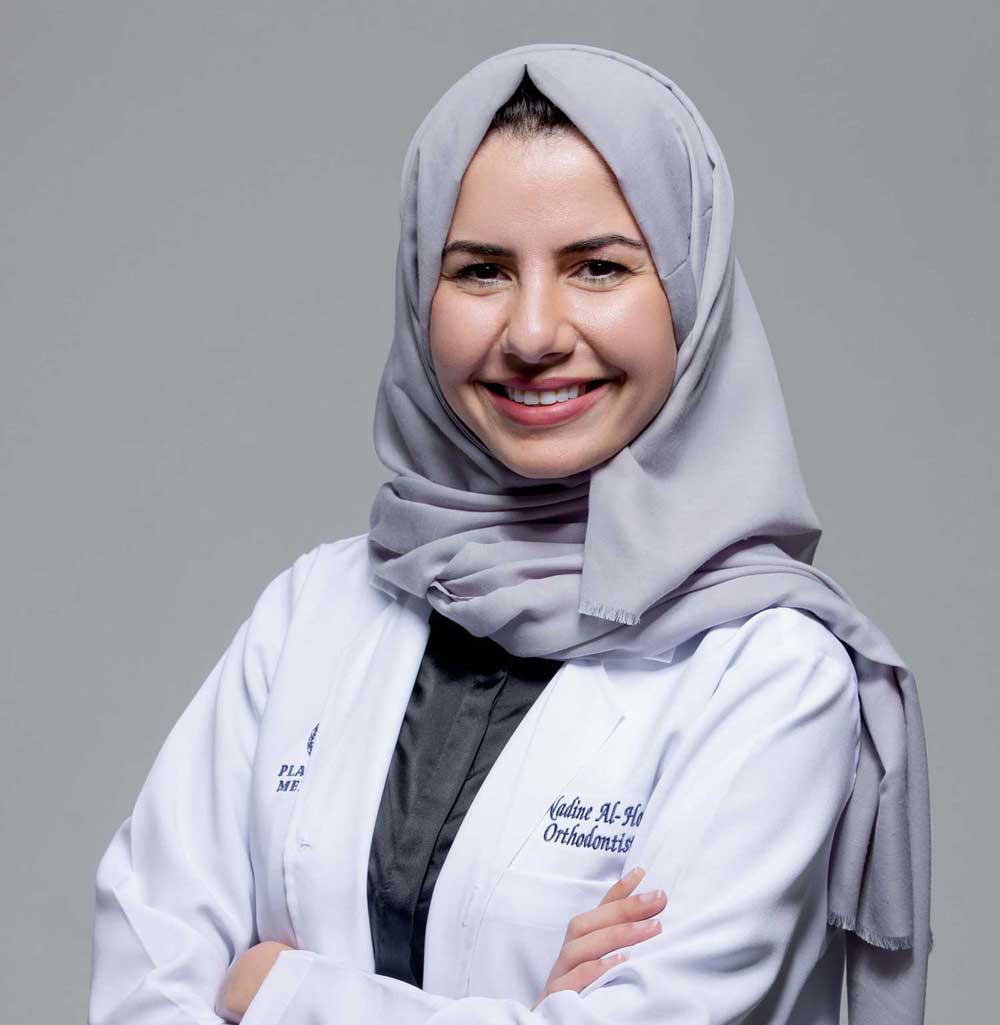
Braces and clear aligner treatment at Platinum is planned and supervised by our orthodontics specialists, Dr. Nadine Homoud and Dr. Maria Jose Chacón. Dr. Nadine Homoud holds a PhD in orthodontics from the University of Bristol, MOrth qualifications from the Royal Colleges of Surgeons of England and Edinburgh and the Jordanian Board in Orthodontics. She trained for three years as an orthodontic registrar at the University of Bristol Dental Hospital and the Royal United Hospitals in Bath, is an Invisalign Platinum Provider and lectures part time at Qatar University. When treatment also involves other dental care, such as veneers, implants or gum treatment, they coordinate the plan with the relevant specialist.
Our approach
Orthodontic planning starts with assessment: tooth alignment, bite relationships (overbite, underbite, crossbite), gum health, and movement goals. If you’re planning an aesthetic upgrade after alignment, we can coordinate with whitening and veneers where appropriate.
We assess crowding, spacing, bite relationships (overbite/underbite/crossbite), gum health, and hygiene. Your plan includes timing, expected stages, and retention to keep results stable.
A reliable option for a wide range of alignment and bite cases — using controlled forces for predictable tooth movement.
Ceramic brackets blend more subtly with the teeth while delivering fixed orthodontic control — selected based on case needs and bite forces.
Lingual braces sit behind the teeth, making them less visible from the front. Suitability depends on anatomy, bite, and comfort tolerance — your doctor will advise if this option is appropriate.
Self-ligating systems use a built-in mechanism rather than elastic ties. They may improve hygiene and comfort for some patients depending on the plan.
Orthodontics isn’t just straight teeth — it’s about bite balance and long-term stability. We plan around function, comfort, and cleanability.
Retention is part of the outcome. Retainers help keep teeth stable after braces. Your orthodontist will advise the right retention plan for your case.
Considering refinement after alignment? Explore teeth whitening and veneers.
We guide you on comfort strategies, cleaning, and check-up timing. Treatment duration varies by complexity and how teeth respond to movement.
Questions
Many courses take about 12 to 24 months. Simpler alignment can take less time and complex bite correction longer. Your orthodontist will estimate your treatment time after your assessment.
Teeth often feel tender for a few days after braces are fitted and after adjustments. Soft foods and the pain relief your orthodontist recommends usually help, and orthodontic wax protects the cheeks if a bracket rubs.
It depends on your teeth, bite and priorities. Metal braces suit a wide range of cases, ceramic braces are less noticeable, lingual braces sit behind the teeth and suit selected cases, and self-ligating braces use built-in clips instead of elastic ties. Your orthodontist will recommend an option after assessment.
Yes. Adults can have braces at any age, provided the teeth and gums are healthy enough. Your orthodontist will check your gums and bite first.
Review visits are usually every 4 to 8 weeks, so your orthodontist can adjust the wires and check your progress and gum health.
Avoid hard and sticky foods such as nuts, hard sweets, ice and toffee, and cut firm foods like apples and carrots into small pieces. These foods can break brackets or bend wires.
Yes. Retainers hold the teeth in their new position, because teeth can drift after braces are removed. Your orthodontist will explain which retainer suits you and how long to wear it.
Braces, often combined with elastics, can correct many overbites, underbites and crossbites. Some bite problems related to jaw size or position need additional treatment, which your orthodontist will discuss after assessment.
Contact the clinic so a repair can be arranged. If a wire is poking, cover it with orthodontic wax until you are seen.
Neither is better for everyone. Braces are fixed in place, while clear aligners are removable and need to be worn for most of the day. Your orthodontist will advise which suits your tooth movements, bite and lifestyle.
Private consultation
Prefer guidance? Book a consultation and we’ll recommend the right approach for your goals — braces, clear aligners, or a staged plan for bite stability and long-term retention.

Doctor-led dentistry, dermatology & aesthetics — crafted in Lusail with calm precision.