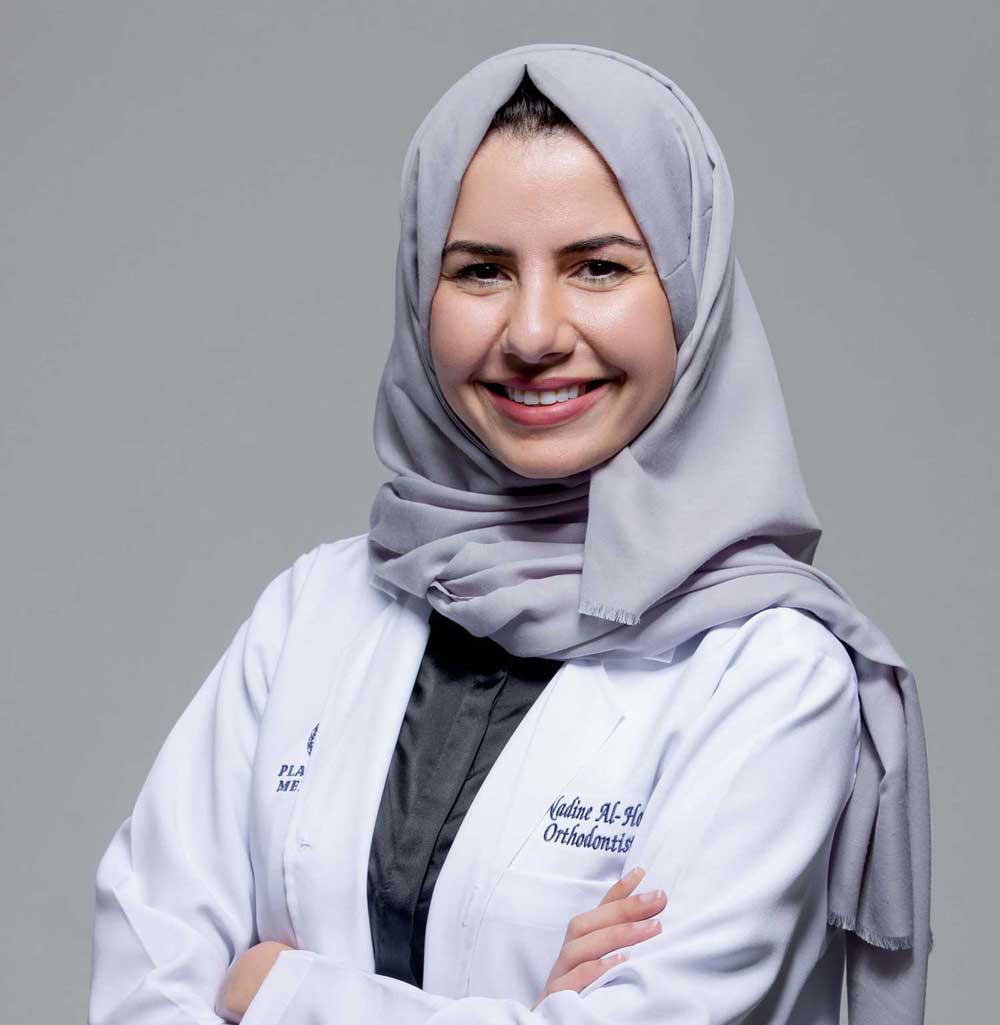
Explore Invisalign and clear aligners in Lusail, Qatar with Dr. Nadine or Dr. Maria. Removable trays are planned around your tooth alignment, bite and suitability. Your consultation is the place to discuss treatment time, cost and follow-up.
Clear aligners are removable, near-invisible trays designed to straighten teeth gradually.
Planning is tailored to your bite, spacing/crowding, and the finish you want — with comfort and long-term stability in mind.
Prefer fixed orthodontics? Explore Dental Braces for complex movement and bite correction.
The essentials
Invisalign and clear aligners, in brief
Invisalign and other clear aligners straighten teeth with a series of custom, removable trays, each worn for 1 to 2 weeks for 20 to 22 hours a day. At Platinum Medical Center in Lusail, aligner treatment is planned with an iTero digital scan and supervised by specialist orthodontists. Minor alignment can take around 6 months; many cases take 12 to 18 months, followed by retainers.
Suitable for
Teenagers and adults with crowded or spaced teeth and selected bite problems, after an orthodontic assessment
How it works
A series of custom clear aligners, each changed every 1 to 2 weeks, moving the teeth in small planned steps
Daily wear
20 to 22 hours a day; taken out only to eat, drink anything other than water, and clean
Typical treatment time
Around 6 months for minor alignment; often 12 to 18 months for more complex cases
Review visits
Usually every 6 to 10 weeks
Records
iTero digital scan, with photographs and X-rays where indicated
After treatment
Retainers to hold the teeth in their new position
Your orthodontists
Dr. Nadine Homoud and Dr. Maria Jose Chacón, orthodontics specialists; Dr. Nadine is UK-trained (MOrth, Royal Colleges of Surgeons of England and Edinburgh), an Invisalign Platinum Provider and a part-time lecturer at Qatar University
Where
17th Floor, QIG Tower, Lusail, for patients across Lusail, Doha and Qatar
Clear aligners move the teeth through a planned sequence of trays, sometimes helped by attachments and elastics. Your orthodontist will confirm what is achievable for your case.
Crowded, overlapping or rotated teeth
Gaps and spacing between teeth
Selected overbite, underbite, crossbite and open bite cases
Teeth that have shifted after earlier braces
Aligning teeth before veneers, crowns or implants, when needed
Fixed braces may be recommended instead for some severe rotations, large vertical tooth movements, significant differences in jaw position, or when wearing aligners for most of the day is not realistic.
Compare
Invisalign vs braces compared
Clear aligners (Invisalign)
Appearance
Clear and hard to notice
Removable
Yes, for eating and cleaning
Daily commitment
Must be worn 20 to 22 hours a day
Eating
No food restrictions once the aligners are out
Cleaning
Brush and floss as usual, and clean the aligners
Review visits
Usually every 6 to 10 weeks
Suitable cases
Many alignment and selected bite cases
Fixed braces
Appearance
Visible brackets; ceramic and lingual options are less noticeable
An examination of your teeth, gums and bite, with an iTero digital scan, photographs and X-rays where indicated.
Before you start
Your digital treatment plan
Your orthodontist plans each stage of tooth movement and shows you a 3D preview of the planned result before your aligners are made.
First aligners
Fitting your first aligners
Small tooth-coloured attachments are bonded to some teeth if your plan needs them, and you learn how to put in, remove and clean your aligners.
Every 1 to 2 weeks
Changing aligners
You move to the next set every 1 to 2 weeks, as instructed.
Every 6 to 10 weeks
Review visits
Your orthodontist checks that the teeth are moving to plan, usually every 6 to 10 weeks, and carries out any planned IPR or elastics.
If needed
Refinements
If some teeth need fine-tuning, a new scan is taken and additional aligners are made.
After treatment
Retention
Retainers are fitted to hold the result, with reviews to check stability.
Timing
How long does Invisalign take?
Minor alignment can take around 6 months, and many comprehensive cases take 12 to 18 months; complex bite correction can take longer. The main factors are how far the teeth need to move, the type of bite correction, whether refinements are needed and, above all, how consistently the aligners are worn. Wearing them for less than 20 to 22 hours a day can slow progress and may mean extra aligners. Your orthodontist will estimate your treatment time after your assessment.
Aligner treatment depends on following the wear and review plan prescribed for you. Discuss removing trays for meals, cleaning them, and what to do if a tray is lost or stops fitting. Ask whether attachments, IPR or elastics are part of your individual plan.
Can I choose aligners instead of braces?
The choice depends on your bite, the movements needed and whether a removable appliance suits your routine. Discuss the options with your orthodontist; aligners and fixed braces are not interchangeable for every case.
Will I need retainers afterward?
Retainers help maintain tooth positions after orthodontic treatment. Your orthodontist will explain the type, wear plan and follow-up appropriate for you.
Wear your aligners 20 to 22 hours a day, and take them out only to eat, drink anything other than plain water, and clean.
Brush and floss before putting the aligners back in, so food and sugar are not trapped against your teeth.
Clean the aligners gently with a soft toothbrush and cool or lukewarm water; hot water can warp them.
Keep the aligners in their case whenever they are out of your mouth, to avoid losing or damaging them.
If an aligner is lost, cracked or stops fitting, contact the clinic; you may be advised to move to the next set or go back to the previous one.
Children and teenagers
Invisalign for teenagers
Clear aligners can suit teenagers as well as adults, provided they will wear them consistently. Some aligner systems for teenagers include wear indicators and allow for teeth that are still coming through. Your orthodontist will advise whether aligners or braces suit your child's growth stage and bite. See also paediatric dentistry.
Safety
Risks and how they are managed
Aligner treatment is generally comfortable, but it carries risks that your orthodontist will explain before you start. Each new set can feel tight for a day or two, and speech may change slightly for the first few days. Teeth that are not cleaned before the aligners go back in are more prone to decay and gum inflammation. Attachments can come loose, and teeth may not follow the plan if the aligners are not worn enough, which can mean refinements. As with any tooth movement, some root shortening can occur, and teeth can shift back if retainers are not worn as advised. Your progress and gum health are checked at every review.
Your consultation
Your first Invisalign consultation
Discuss your goals, bite, gum health and whether removable aligners fit your daily routine. Bring details of previous orthodontic treatment and any retainers you use. Ask what records are needed, whether fixed dental braces should also be considered, and how reviews and retention would work for you. If you’re planning aesthetic work after orthodontics, we can coordinate with veneers and whitening.
Platinum has iTero digital scanning, panoramic X-rays and 3D dental X-rays. They provide different information and are selected according to your assessment; not every case needs every type of imaging. Read about dental imaging and iTero scanning before discussing which records you need.
Your treatment plan
What affects the cost of Invisalign?
The fee for clear aligners depends on how complex your case is, the number of aligners and stages planned, any refinements, attachments, IPR or elastics, and retainers after treatment. You will receive a personalised treatment plan, including fees, after your assessment. Some insurance plans include orthodontic cover, so it is worth checking with your insurer before you start. See insurance and direct billing.
Clear aligner and braces treatment at Platinum is planned and supervised by our orthodontics specialists, Dr. Nadine Homoud and Dr. Maria Jose Chacón. Dr. Nadine Homoud holds a PhD in orthodontics from the University of Bristol, MOrth qualifications from the Royal Colleges of Surgeons of England and Edinburgh and the Jordanian Board in Orthodontics. She trained for three years as an orthodontic registrar at the University of Bristol Dental Hospital and the Royal United Hospitals in Bath, is an Invisalign Platinum Provider and lectures part time at Qatar University. When treatment also involves other dental care, such as veneers, implants or gum treatment, they coordinate the plan with the relevant specialist.
How Aligners Work
A sequence of custom trays applies gentle, controlled forces that guide teeth into healthier positions over time. Your plan is staged, reviewed, and refined as needed.
Progressive movement with a structured plan
Doctor-led checks and adjustments
Designed for comfort and precision
What Aligners Can Help With
Aligners are commonly used for crowding, spacing, and certain bite refinements. Suitability depends on complexity and the type of movement needed.
Crowding and spacing
Mild-to-moderate bite refinement (selected cases)
Aesthetic alignment goals
Bite Correction & Stability
Bite matters as much as straight teeth. We assess overbite, underbite, crossbite and midline balance, then plan movements that support comfort, function and long‑term stability — with retention built in.
Bite analysis and alignment goals
Digital imaging when indicated
Clear timeline + retention plan
Comfort & Hygiene
Because aligners are removable, many patients find brushing and flossing easier than with fixed braces. We guide you on wear time, cleaning, and comfort strategies.
Removable for eating and hygiene
Wear-time guidance for best results
Comfort-first planning
Retention & Long-Term Stability
Retention is part of the result. After alignment, retainers help keep teeth stable. Your orthodontist will advise the right retention plan for your case.
We’ll guide you through check-ups, aligner changes, and any refinements needed. Timeline varies by complexity and how consistently aligners are worn.
Clear follow-up schedule
Refinements if needed
Realistic timing and expectations
Questions
Invisalign FAQ
How long does Invisalign take?
Minor alignment can take around 6 months, and many comprehensive cases take 12 to 18 months. Complex bite correction can take longer. Your orthodontist will estimate your treatment time after your assessment.
How many hours a day do I need to wear aligners?
20 to 22 hours a day. Take them out only to eat, to drink anything other than plain water, and to clean your teeth and aligners.
Does Invisalign hurt?
Most people feel pressure or tightness for a day or two with each new set of aligners, which usually settles quickly. If an edge rubs, contact the clinic so it can be checked and smoothed.
Can I eat and drink with aligners in?
Take your aligners out to eat and to drink anything other than plain water. Hot drinks can warp them, and sugary or coloured drinks can harm the teeth or stain the aligners. Brush your teeth before putting them back in.
Is Invisalign as effective as braces?
For many cases of crowding and spacing, aligners and braces can both achieve good results. Some complex movements are more predictable with fixed braces. Your orthodontist will advise which suits your teeth, bite and routine.
Can Invisalign fix an overbite or underbite?
Aligners, often combined with elastics, can correct many mild to moderate overbites, underbites and crossbites. Bite problems related to jaw size or position may need braces or additional treatment, which your orthodontist will discuss after assessment.
What are attachments and IPR?
Attachments are small tooth-coloured bumps bonded to some teeth to help the aligners grip and move them. IPR is gentle polishing between selected teeth to create a little space. Both are used only when your plan needs them.
Can Invisalign straighten teeth that moved after braces?
Often, yes. Aligners are commonly used when teeth have shifted after earlier orthodontic treatment, usually because retainers were not worn. Your orthodontist will check your bite and gums and plan retention afterwards.
What happens if I lose or break an aligner?
Contact the clinic. Depending on your stage of treatment, you may be advised to move to the next set or go back to the previous one while a replacement is arranged.
Am I a good candidate for Invisalign?
Good candidates have healthy teeth and gums, crowding, spacing or selected bite problems, and can wear aligners for 20 to 22 hours a day. Gum disease or decay needs treating first. An orthodontic assessment confirms whether aligners or braces suit you.
Private consultation
Begin with an Invisalign consultation in Lusail
Prefer guidance? Book a consultation and we’ll recommend the right approach for your goals —
clear aligners, braces, or a staged plan for bite stability and long-term retention.