


Assessment & Treatment Planning
Tell the dental team about sensitivity, bleeding, previous gum treatment and any concerns about staining. Assessment covers gum health and deposits before deciding on scaling, Airflow or other care.
Fresh feel. Healthier gums. Cleaner finish.
A cleaning appointment starts with assessment of your teeth, gums and deposits. At Platinum Medical Center in Lusail, discuss whether Airflow stain cleaning, scaling or another approach is needed, and how sensitivity and gum health affect your plan.
Book a Dental Hygiene Assessment
Bleeding gums or bad breath? Explore dedicated Gum Care.
The essentials
A professional teeth cleaning at Platinum Medical Center in Lusail starts with a check of your gums, deposits and staining. Airflow then uses a fine stream of air, warm water and a very fine powder to lift plaque and surface stains from coffee, tea and smoking, including between teeth and around braces, crowns and implants. Hard deposits (tartar) are removed with gentle ultrasonic scaling where needed, and the teeth are polished smooth. Most visits take about 30 to 60 minutes, and most people need a cleaning every 6 months, or every 3 to 4 months when the gums need closer care.
Our approach
Hygiene is personalised.
We assess gum health, plaque and calculus build-up, stain patterns and sensitivity — then select the right combination of Airflow, scaling, and polishing (and deeper cleaning in selected cases). Your plan includes a clear maintenance interval to keep results stable.
Looking for a brighter shade? Explore teeth whitening. For structured periodontal care, explore gum care.
What is included
Each visit is built from the same steps, chosen and adjusted for your teeth and gums.
Tell the dental team about sensitivity, bleeding, previous gum treatment and any concerns about staining. Assessment covers gum health and deposits before deciding on scaling, Airflow or other care.
Airflow uses a controlled stream to help lift surface staining from coffee, tea and smoking. It’s commonly selected for a fresher feel and cleaner finish — especially around hard-to-reach areas.
Scaling removes plaque and calculus build-up that brushing can’t. Polishing smooths the tooth surface to reduce stain retention and leave a cleaner finish. In selected cases, deeper cleaning may be recommended to support gum healing.
Healthy gums are the foundation of stable teeth. Hygiene visits can reduce inflammation, bleeding and odour — and support long-term periodontal stability.
A clean surface improves comfort and prepares the smile for whitening when appropriate. We’ll advise whether whitening fits your goals and sensitivity profile.
We guide you on brushing technique, interdental cleaning, and habits that reduce staining and protect gum health between visits.
How Airflow works
Airflow is a way of cleaning teeth with a gentle spray rather than scraping.
A thin, warm spray of water and air carries a very fine powder that lifts plaque and stains from the surface of the teeth.
The spray cleans between teeth, along the gum line and around braces, crowns, veneers and implants.
The fine powder is gentle on enamel, gums and dental work, so most people find it comfortable, even with sensitive teeth.
Airflow removes soft plaque and stains well. Hard tartar still needs scaling, which is why many visits use both.
Compare
Each step removes something different, so your dentist chooses the mix your teeth need.
A cleaning removes stains to bring back your natural shade. To make teeth lighter than their natural shade, see teeth whitening.
A cleaning removes what brushing cannot reach, so your care at home can do the rest.
The visit
From arrival to your next appointment, here is what to expect.
 About 10 minutes
Your dentist checks your gums, the deposits and the staining, asks about sensitivity and bleeding, and explains which steps you need.
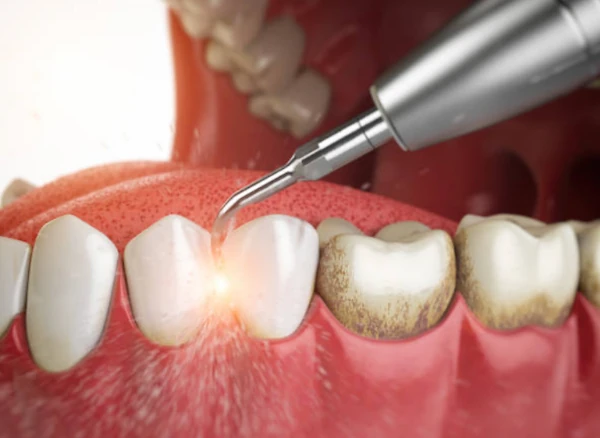 About 15 minutes
A warm spray of air, water and fine powder lifts plaque and stains from every surface, including between the teeth and around dental work.
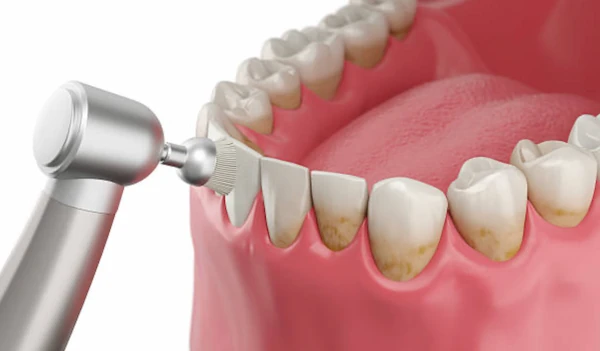 Where needed
A gentle ultrasonic tip removes hard tartar above and just below the gum line. Sensitive areas can be numbed first.
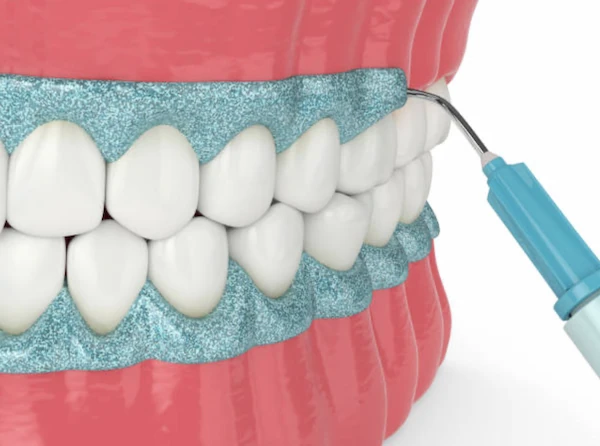 A few minutes
The teeth are polished smooth, so they feel clean and hold less stain.
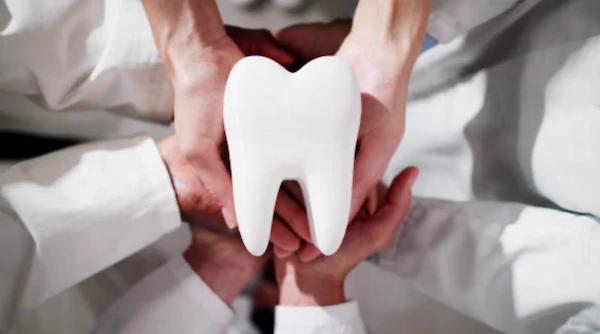 Before you leave
You leave with simple home-care advice and a cleaning interval set for your gums, usually 6 months or 3 to 4 months.
How often
For most people with healthy gums, a check-up and cleaning twice a year keeps tartar and stains under control.
For gum problems, heavy tartar, smoking or a history of gum disease, shorter intervals keep the gums stable.
Brackets and implants trap plaque more easily, so your dentist may suggest more frequent cleaning.
Ask for an interval based on your gum health, deposits, home care and individual needs rather than a fixed schedule for everyone.
Teeth in Qatar
Karak, Arabic coffee, tea and shisha are part of daily life here, and all of them stain teeth.
Suitability
Usually suitable
Tell your dentist first
Bleeding gums need assessment rather than assuming stain cleaning alone addresses the cause. Your dentist may suggest gum care first.
Safety
Professional cleaning is one of the safest treatments in dentistry. Teeth can feel sensitive for a day or two, and inflamed gums can feel tender or bleed a little; both settle quickly as the gums heal. Cleaning does not damage healthy enamel.
Gentle settings, numbing gel or local anaesthetic for sensitive areas, single-use tips and clear advice keep the visit comfortable. Tell your dentist if sensitivity lasts longer than a few days.
Your plan
Cleaning is planned around your teeth and gums, so the fee depends on what is needed. You receive a clear plan, including fees, after your assessment.
Many insurance plans cover routine cleaning, so it is worth checking your policy.
Your consultation
No. Cleaning addresses deposits and surface staining; whitening is a separate option that requires assessment.
Not necessarily. The dental assessment determines whether scaling or other cleaning is also needed.
Tell the dental team. Bleeding gums need assessment rather than assuming stain cleaning alone addresses the cause.
Ask for an interval based on your gum health, deposits, home care and individual needs rather than a fixed schedule for everyone.
Your specialist

Cosmetic & Restorative Specialist
Dr. Ahmed checks your teeth and gums at your hygiene visit, plans the cleaning, and links it with gum care, whitening or a restoration when the check shows they are needed.
Questions
A cleaning method that uses a fine stream of air, warm water and a very fine powder to lift plaque and surface stains from the teeth, including between them and around braces, crowns and implants.
They do different jobs. Airflow removes soft plaque and stains gently; scaling removes hard tartar. Many visits use both, chosen after your assessment.
Usually every 6 months. People with gum problems, heavy tartar, braces or implants often need a cleaning every 3 to 4 months.
Most people feel little discomfort. Airflow feels like a warm spray, and sensitive areas can be numbed before scaling.
Usually about 30 to 60 minutes, depending on the amount of tartar and staining.
A cleaning removes surface stains, so teeth often look brighter, but it brings back your natural shade rather than lightening it. Whitening is a separate treatment.
Yes. Surface stains from coffee, tea, karak and smoking are what Airflow removes best. Stains inside the tooth need whitening or another treatment.
Yes. The fine powder is gentle on dental work, and Airflow is often chosen because it cleans well around braces and implants.
Bleeding usually means the gums are inflamed by plaque and tartar. It often settles within days after a cleaning; if it continues, your gums need a check for gum disease.
A routine cleaning removes plaque, tartar and stains above and just below the gum line. A deep cleaning treats gum disease by cleaning the roots below the gum line, usually with local anaesthetic.
Yes. Cleaning is safe in pregnancy and helps with the sore or bleeding gums that are common then. Tell your dentist that you are pregnant.
You can eat and drink straight away. Brush twice a day, clean between your teeth daily and come back at the interval your dentist suggests.
Yes. A gentle approach and numbing for sensitive areas keep it comfortable. Teeth may feel sensitive for a day or two and then settle.
The fee depends on the steps needed, the amount of tartar and staining, and whether gum treatment is needed. You receive a clear plan, including fees, after your assessment.
Further reading
Private consultation
Prefer guidance? Book a Dental Hygiene Assessment and we’ll recommend the right approach — Airflow stain lift, scaling where needed, and a maintenance plan designed around your gum health.

Doctor-led dentistry, dermatology & aesthetics — crafted in Lusail with calm precision.


