


A single tooth
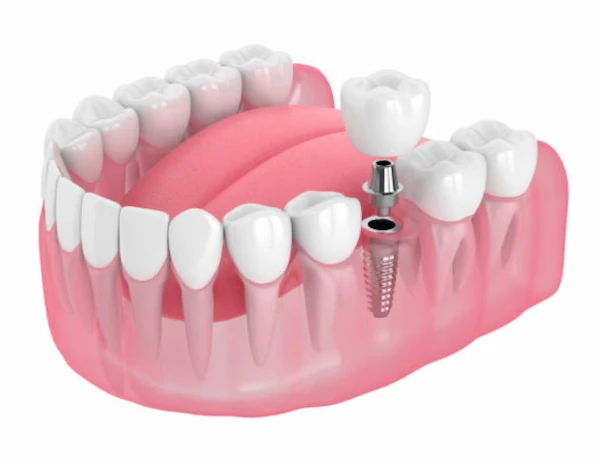
One implant and one crown. The neighbouring teeth are left untouched, and the new tooth is brushed and cleaned like a natural one.
SuitsOne missing or failing tooth
Stability first. Then a natural finish.
Considering dental implants in Qatar to replace one or more missing teeth? At Platinum Medical Center in Lusail, your consultation assesses your teeth, gums, bite and bone support. Discuss whether implants are suitable, the proposed treatment stages, healing and long-term maintenance, and alternatives such as bridges or dentures.
The essentials
A dental implant replaces the root of a missing tooth. A small titanium post is placed in the jawbone, fuses with the bone over the following months, and then holds a crown, a bridge or a full set of teeth. At Platinum Medical Center in Lusail, implants are planned with 3D X-rays and digital scans and placed by an oral and maxillofacial surgeon.
Our approach
Implant planning is case-dependent. We assess missing-tooth position, bone support, gum health, and hygiene — then recommend the safest route. When needed, planning can be coordinated with oral surgery, gum care, and stabilisation through general dentistry.
Treatment options
The right option depends on how many teeth are missing, where they are, the bone available and how you want your teeth to feel day to day. All of the options below are available at Platinum, and your surgeon recommends one after your assessment.
One implant and one crown. The neighbouring teeth are left untouched, and the new tooth is brushed and cleaned like a natural one.
SuitsOne missing or failing tooth
Two or more implants hold a fixed bridge, so not every missing tooth needs its own implant.
SuitsTwo or more missing teeth next to each other
A complete fixed set of teeth on four to six implants, using approaches such as the All-on-4® treatment concept. In suitable cases, a fixed temporary set can be fitted soon after surgery.
SuitsMost or all teeth missing or failing in one jaw
A removable denture that clips onto two or more implants. It is much steadier than a conventional denture and still comes out for cleaning.
SuitsDenture wearers who want stability without a fixed bridge
An implant can sometimes be placed on the same day a tooth is removed, known as an immediate implant, when the bone and gum allow it. If implants are not right for you, a dental bridge or denture may be the better choice.
Compare
Each replaces missing teeth in a different way. The best choice depends on your bone, your gums, the neighbouring teeth and what matters most to you.
Read dental bridges and when they beat implants for a fuller comparison.
We plan the implant around the final tooth, not the other way round.
The journey
For most people, the final teeth are fitted about 3 to 6 months after the implant is placed. Extractions, gum treatment or bone grafting can add a few months, and in selected cases a temporary tooth can be fitted on the day of surgery. Your surgeon gives you a personal timeline after your assessment.
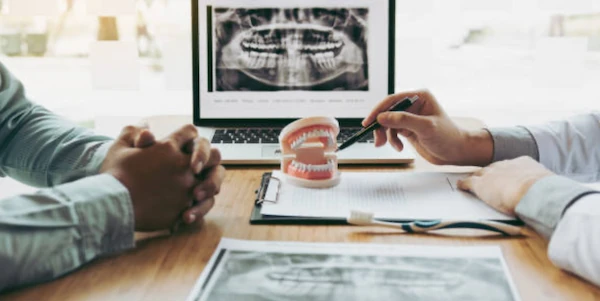 First visit
Your surgeon examines your teeth, gums and bite, reviews your health and medicines, and uses 3D X-rays and a digital scan where indicated. You leave with a plan setting out the options, stages and timeline.
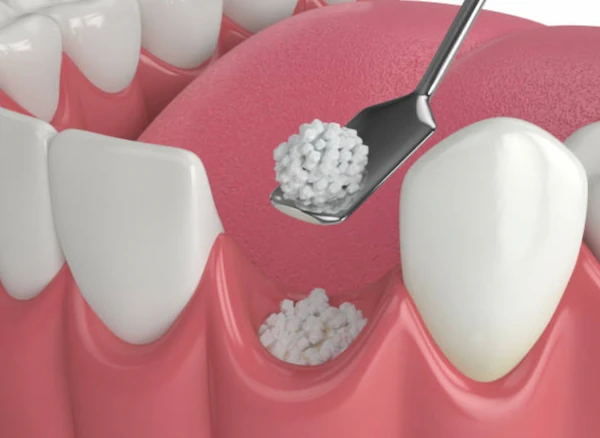 If needed
Gum inflammation is treated first, failing teeth are removed, and bone is rebuilt with a graft or sinus lift if there is not enough to hold an implant in the right position.
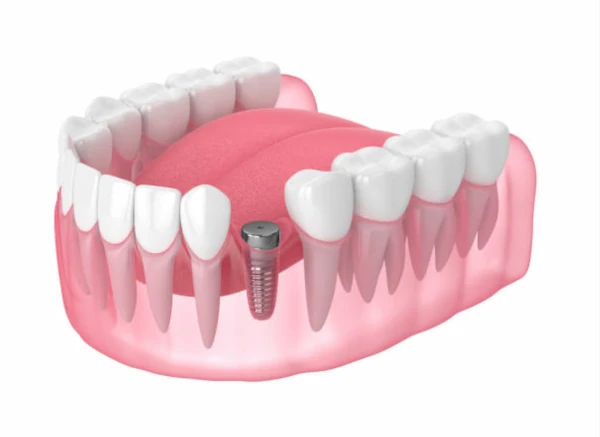 The day of surgery
The implant is placed under local anaesthetic, often in about an hour for a single tooth, and you go home the same day. Where suitable, a temporary tooth is fitted so you are not left with a gap.
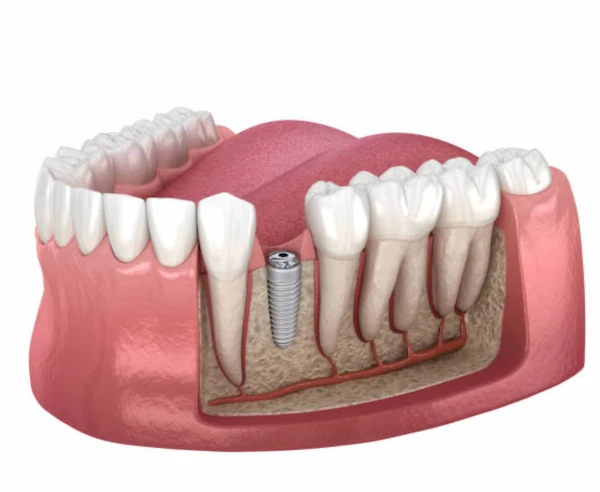 About 2 to 6 months
The bone grows onto the implant surface and locks it in place, a process called osseointegration. It is usually quicker in the lower jaw than in the upper jaw, and you are reviewed along the way.
 Two short visits
A digital scan records the position of the implant, and the crown, bridge or denture is made to match the shade, shape and bite of your teeth. It is attached with a small connector called an abutment, and your bite is checked and balanced.
 For life
Implants need daily cleaning and regular hygiene visits, just like natural teeth. Reviews check the gum, the bone around the implant and your bite.
Comfort and recovery
Implant surgery is done under local anaesthetic, so you should feel pressure but not pain. Afterwards, many people find the discomfort milder than they expected, and it usually settles within a few days with standard painkillers. If you feel anxious, ask your surgeon whether sedation is suitable for you.
Some swelling, mild bruising and slight bleeding are normal. Rest, use a cold compress, keep your head raised and take painkillers as advised.
Eat soft foods and chew on the other side. Keep the area clean exactly as instructed, and avoid smoking, which slows healing.
Avoid heavy biting on the implant and attend your reviews. Contact the clinic if pain, swelling or bleeding gets worse instead of better.
Read recovery and what to eat after a tooth extraction, day by day.
Suitability
Most adults with missing teeth can have implants, provided the jaw has finished growing and the gums and general health allow minor surgery.
Usually suitable
Needs extra planning
Tell your surgeon about every medicine you take, including injections for osteoporosis.
When bone is thin
After a tooth is lost, the bone that held it gradually shrinks. If there is not enough bone to hold an implant in the right position, it can be rebuilt.
Graft material is added where the bone is too thin or too low, either at the same time as the implant or a few months before it.
In the upper back jaw, the floor of the sinus is gently raised and bone is added beneath it to make room for an implant.
When a tooth is removed, the socket can be filled with graft material to limit shrinkage before an implant is placed.
A graft is not a sign of a difficult case; it lets the implant sit where the final tooth needs it. Grafting usually adds a few months of healing, depending on its type and size.
Safety
Implant treatment involves surgery and is not suitable for every patient. In the first days, swelling, bruising, bleeding and infection are possible. Less commonly, an implant does not fuse with the bone and has to be removed and replaced later, or a nerve or the sinus close to the implant site is affected, which is why careful 3D planning matters.
Over the long term, plaque around an implant can cause inflammation and bone loss, known as peri-implantitis, so cleaning and reviews matter for life. Gum health, smoking, medicines and general health all affect the risk, and your surgeon explains the risks that apply to you before treatment.
Longevity
With good cleaning and regular reviews, implants can last for decades, and long-term studies report that more than 9 in 10 are still in place after 10 years. The crown on top meets everyday wear and may need replacing after many years.
Caring for your implant
Your treatment plan
Implant treatment is planned individually, so the fee depends on what your case needs. You receive a personalised treatment plan, including fees, after your assessment.
Some insurance plans cover part of implant treatment, so it is worth checking your policy before you start.
Your specialist
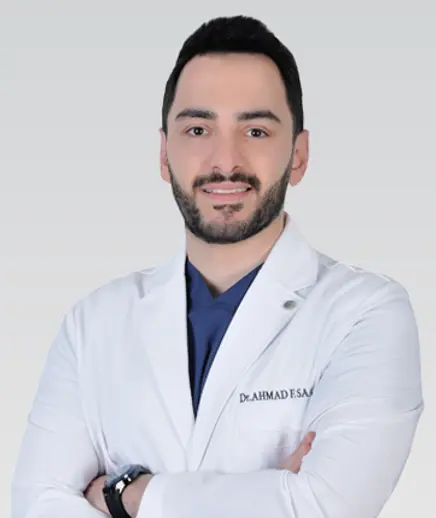
Oral & Maxillofacial Surgeon
Dr. Ahmad plans and places dental implants at Platinum, from single teeth to full-arch treatment, and coordinates the final teeth and any gum treatment with the wider dental team.
Questions
There is no upper age limit. What matters is your general health, your gums and your bone, which your surgeon assesses at your consultation. Implants are usually placed once the jaw has finished growing, from the late teens.
Usually 3 to 6 months from placing the implant to fitting the final teeth. Extractions, gum treatment or bone grafting can add a few months, and in selected cases a temporary tooth can be fitted on the day of surgery.
The surgery is done under local anaesthetic, so you should feel pressure but not pain. Afterwards, discomfort and swelling are usually mild and settle within a few days with standard painkillers.
Sometimes. An immediate implant is possible when the bone and gum are healthy and the implant can be held firmly. If there is infection or too little bone, a staged approach is safer.
In selected cases, a temporary crown or a fixed temporary bridge can be attached soon after the implants are placed, including in full-arch treatment such as All-on-4. It depends on how firmly the implants are held in the bone.
A way of replacing a full arch of teeth with a fixed bridge on four implants, angled to make the most of the available bone. It can reduce the need for bone grafting in some patients. Your surgeon will advise whether four or more implants are right for you.
Not always. A graft is needed when there is not enough bone to hold the implant in the right position, which your 3D X-ray shows. Grafting usually adds a few months of healing.
With good cleaning and regular reviews, implants can last for decades, and long-term studies report that more than 9 in 10 are still in place after 10 years. The crown on top may need replacing after many years of wear.
Neither is better for everyone. An implant leaves the neighbouring teeth untouched and helps preserve the bone, while a bridge avoids surgery and is completed sooner. Your dentist will explain which suits your teeth and bone.
Yes, but smoking raises the risk of healing problems and implant failure. Stopping before surgery and during healing improves the outcome.
Usually, yes, if your diabetes is well controlled. Your surgeon may ask about your recent blood sugar levels before planning treatment.
Brush twice a day, clean around the implant with interdental brushes or a water flosser, and keep up regular hygiene visits. Contact the clinic if the gum bleeds or swells, or the tooth feels loose.
Further reading
Private consultation
Book an implant consultation at Platinum Medical Center in Lusail to discuss suitability, treatment stages, alternatives and maintenance for replacing missing teeth.

Doctor-led dentistry, dermatology & aesthetics — crafted in Lusail with calm precision.


