


When a Crown is Recommended
Crowns are commonly recommended when a tooth is structurally compromised — such as after large decay removal, fracture, heavy wear, or extensive fillings.
Strength, protection, and a natural finish.
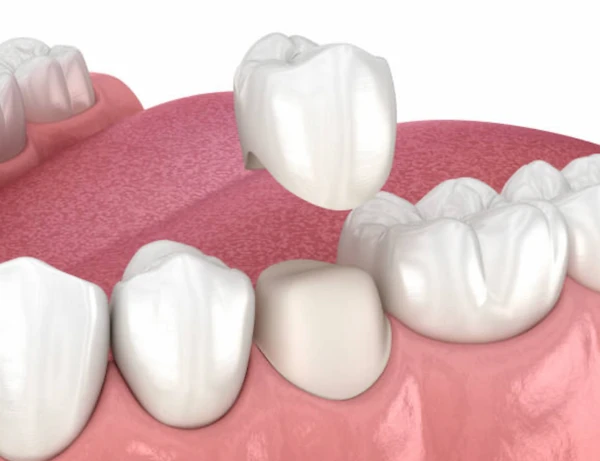
A crown covers and protects a weakened tooth — restoring strength, bite function, and aesthetics. Planning is doctor-led and tailored: how much tooth structure remains, bite forces, and the finish you want.
The essentials
A dental crown is a tooth-shaped cap that covers a weakened tooth to protect it, restore its shape and bite, and match the colour of your other teeth. At Platinum Medical Center in Lusail, crowns are usually made in zirconia or E.max (lithium disilicate), and they are often recommended after root canal treatment, for a cracked or heavily filled tooth, or to restore a dental implant. Treatment usually takes two visits about 1 to 2 weeks apart, with a temporary crown in between, and a well-made crown often lasts 10 to 15 years or more with good care.
Our approach
We assess tooth strength, gum health, and bite forces — then recommend the most appropriate restoration.
In many cases, a crown is advised after root canal treatment, after large fillings, or when a tooth is cracked. For purely cosmetic refinement (when the tooth is otherwise healthy), you may be better suited to veneers or bonding.
Explore related care: composite filling, veneers, and teeth whitening.
When it helps
A crown protects a tooth that a filling can no longer hold together.
Crowns are commonly recommended when a tooth is structurally compromised — such as after large decay removal, fracture, heavy wear, or extensive fillings.
After root canal treatment, the final restoration depends on the tooth’s position and how much healthy structure remains. Back teeth often need a crown to help protect against fracture; a front tooth may not always need one. Your dentist will recommend the restoration and timing for your tooth. A crown does not remove the need for hygiene and follow-up.
Material selection depends on location, bite forces, and aesthetics. Your doctor will advise the most appropriate option for durability and a natural-looking finish.
A refined crown is as much about fit as it is about looks. We check bite carefully and aim for a comfortable result that integrates naturally with your smile.
A dental implant is finished with a crown made for it, fixed to the implant once the bone has healed.
Crowns can last for years with proper care. We’ll guide you on hygiene, avoiding excessive force, and when protective options (like night guards) may be helpful.
Materials
Both are metal-free ceramics. The choice depends on where the tooth is and how strongly you bite.
Your dentist recommends the material for each tooth; some smiles use both.
Compare
Each restoration suits a different amount of damage. The less tooth that needs covering, the less is removed.
Our guide to crowns, veneers and fillings explains the choice in more detail.
A crown is only as good as its fit: the edges, the contacts and the bite decide how long it lasts.
The visit
From the first assessment to your review, here is what to expect.
 First visit
Your dentist examines the tooth, takes an X-ray, checks the gums and your bite, and explains whether a crown, a filling or another option suits the tooth best.
 About 60 to 90 minutes
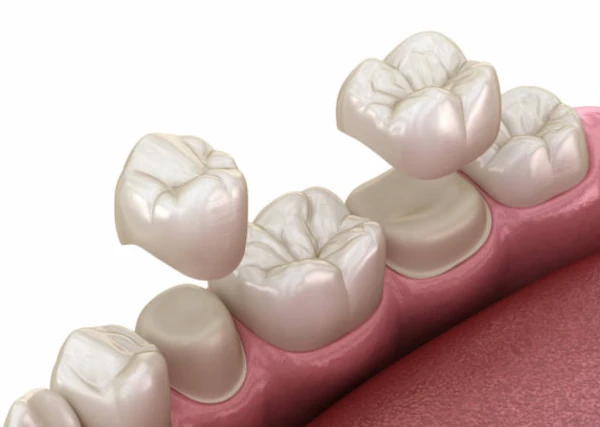
After local anaesthetic, the tooth is shaped to make room for the crown. A digital scan records the tooth and the shade is chosen. A temporary crown protects the tooth.
The crown is made to the scan, shaped and coloured to match your neighbouring teeth.
 About 30 to 60 minutes
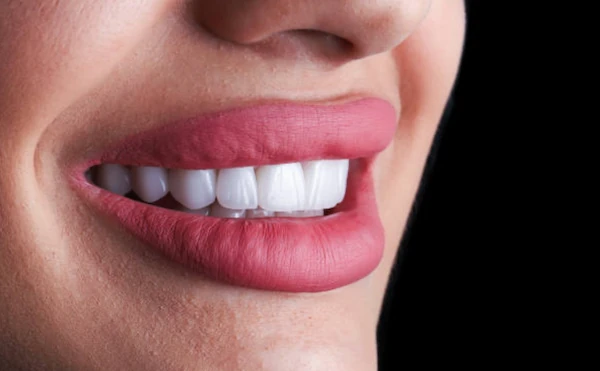
The temporary crown comes off, and the new crown is tried in, checked for fit, contacts, bite and shade, then bonded or cemented in place.
 Afterwards
Brush twice a day and clean between your teeth daily, especially where the crown meets the gum. Your crown is checked at your routine visits.
Lifespan
The bite can feel new and the tooth a little sensitive. If the crown feels high when you bite, tell us so it can be adjusted.
With good cleaning and regular checks, most crowns last many years, and many last much longer.
Decay at the edge of the crown, grinding, and biting hard objects such as ice or nut shells.
Planning
A few decisions before treatment make the result better.
Suitability
Usually suitable
Other steps may come first
Your dentist explains the options for your tooth, including what happens if you wait.
Safety
The tooth can feel sensitive to cold for a few days after preparation. A temporary crown can loosen; call us and keep the tooth clean until it is refitted. Uncommonly, a tooth that has not had root canal treatment becomes inflamed after preparation and needs it later. Ceramic can chip, and decay can start at the edge of a crown if cleaning is poor.
Careful preparation, a well-fitting temporary crown, precise scans, close checks of fit and bite, and regular reviews keep these risks low.
Your plan
A crown is planned around your tooth, so the fee depends on what it needs. You receive a clear plan, including fees, after your assessment.
Many insurance plans cover part of a crown, so it is worth checking your policy.
Your consultation
Ask how much healthy tooth is left and what each option means for the tooth in the long term.
Ask why zirconia or E.max is recommended for its position and your bite.
Ask about the shade, and whether to whiten before the crown is made.
Ask how to clean around the crown and whether you need a night guard.
Your specialist

Oral & Maxillofacial Surgeon
Dr. Ahmad plans and fits crowns at Platinum, from a single cracked tooth to crowns after root canal treatment, and matches each crown’s shape and shade to your smile.
Questions
A tooth-shaped cap that covers a weakened tooth to protect it and restore its shape, bite and colour.
When a tooth is cracked, broken, badly worn or has a very large filling, after root canal treatment on a back tooth, or to restore a dental implant.
Back teeth usually do, because they take strong biting forces and can crack. A front tooth with plenty of healthy structure may only need a filling. Your dentist will advise for your tooth.
Zirconia is the stronger choice for back teeth and people who grind; E.max gives the most lifelike translucency for front teeth. Your dentist chooses by tooth position and bite.
Often 10 to 15 years or more with good cleaning and regular checks.
Usually two, about 1 to 2 weeks apart, with a temporary crown in between.
The tooth is numbed with local anaesthetic, so you should feel pressure but not pain. The tooth can feel sensitive for a few days afterwards.
Yes. The shape and shade are matched to your neighbouring teeth, and ceramic materials reflect light much like enamel.
No. Crowns keep their colour, so if you want whiter teeth, whitening is done first and the crown is matched to the new shade.
A crown covers the whole tooth to protect it; a veneer covers only the front surface of a healthy tooth to change how it looks.
Rarely. If a crown loosens or comes off, keep it, avoid chewing on that side and call us so it can be checked and refitted.
Brush twice a day, clean between your teeth daily, avoid biting very hard objects and keep up your routine checks and cleanings.
Yes. Once the implant has healed into the bone, a crown made for the implant is fixed on top of it.
The fee depends on the material, any treatment needed first, the number of crowns and whether the crown is on a tooth or an implant. You receive a clear plan, including fees, after your assessment.
Further reading
Private consultation
Prefer guidance? Book a consultation and we’ll recommend the right approach — a crown, a filling, or a structured plan to stabilise and protect your tooth.

Doctor-led dentistry, dermatology & aesthetics — crafted in Lusail with calm precision.


