


Bleeding gums
Gums that bleed when you brush are the most common early sign of gum disease. Professional cleaning and better brushing usually stop the bleeding within 2 to 3 weeks.
UsuallyAn early sign
Stability, support, and long-term oral health.
Healthy gums support healthy teeth. We assess inflammation, bleeding and pocket depth — then recommend a structured plan to protect stability.
The essentials
Gum disease starts as gingivitis, with red, swollen gums that bleed when you brush, and can progress to periodontitis, where the gums pull away from the teeth and the bone that holds them is slowly lost. At Platinum Medical Center in Lusail, gum care starts with an examination and gum measurements, then scaling and, where pockets are deeper, deep cleaning (root planing), with laser support in selected cases. Gingivitis usually settles within 2 to 3 weeks of professional cleaning and better brushing. Periodontitis is controlled rather than cured, with a review after treatment and maintenance cleaning every 3 to 4 months. Cosmetic gum depigmentation is also available for suitable cases.
Our approach
Gum disease is often painless until it is advanced, so measuring the gums comes first.
Gum problems are often quiet until they’re advanced. We begin with assessment — gum measurements, plaque and calculus review, and risk factors — then tailor treatment around severity and response. For ongoing maintenance, we often coordinate with dental hygiene & Airflow. If teeth feel loose, painful, or there’s persistent swelling, we’ll advise the safest next step and timing.
Treatments
The stage of gum disease decides the treatment.
Gums that bleed when you brush are the most common early sign of gum disease. Professional cleaning and better brushing usually stop the bleeding within 2 to 3 weeks.
UsuallyAn early sign
Professional cleaning removes plaque, calculus and stain. Early disease may respond to routine scaling; deeper pockets may require deep cleaning (root planing) to support healing.
UsuallyPlaque and tartar removed
When gingivitis is left untreated it can develop into periodontitis — where gums pull away from the teeth, forming pockets that trap bacteria. Treatment focuses on reducing inflammation and protecting long-term support.
UsuallyLong-term support
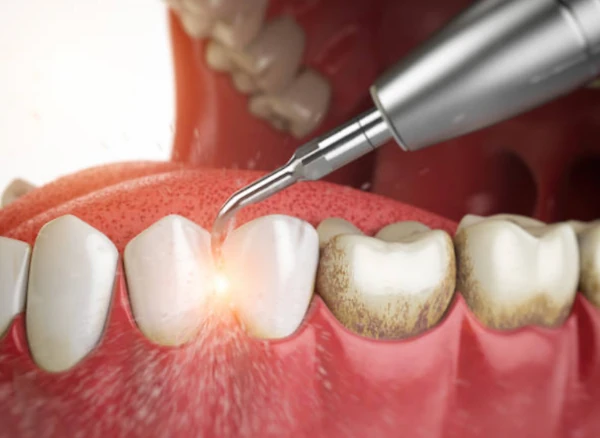
Laser dentistry may support selected periodontal procedures by targeting specific areas with precision. Your clinician will advise if it’s appropriate for your case.
UsuallySelected cases only
Gums can shrink back from the teeth, exposing the roots and causing sensitivity. The cause, such as hard brushing or gum disease, is treated first, and the next steps are discussed.
UsuallyCause treated first
Depigmentation can lighten dark gum pigmentation in suitable cases. We assess cause and suitability first — not every case is appropriate for treatment.
UsuallySuitability first
Signs
Gum disease rarely hurts, so these are the signs to look for.
Smoking can hide bleeding, so smokers can have gum disease without these early signs. For stain lift and routine maintenance, see hygiene & Airflow.
Compare
The two stages of gum disease, next to healthy gums.
Healthy gums hold your teeth for life.
The visit
From the first measurements to long-term maintenance, here is what to expect.
 First visit
Your dentist checks your gums, measures the pockets around each tooth, reviews X-rays if needed and asks about risk factors such as smoking and diabetes, then explains the stage of gum disease and the plan.
 Treatment visits
Plaque and tartar are removed above and below the gum line. Deeper pockets are cleaned under local anaesthetic, usually over 1 to 4 visits.
You are shown how to brush along the gum line and clean between your teeth with floss or interdental brushes, the step that decides how well the gums heal.
 6 to 8 weeks later
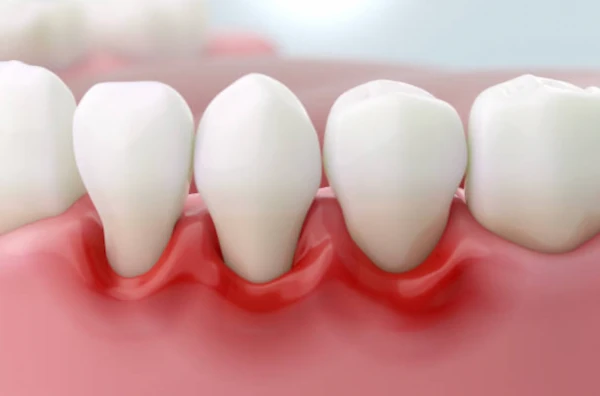
The gums are measured again to check healing. Pockets that remain may need further cleaning, or laser support in selected cases.
 Every 3 to 4 months
Gum health is maintained through consistency — home-care technique, smoking/stain habits, and a tailored maintenance interval. We’ll recommend follow-up timing based on your gum response.
Results
Bleeding and swelling usually settle within 2 to 3 weeks of cleaning and better home care.
Pockets shrink and the gums tighten over 6 to 8 weeks after deep cleaning. Lost bone does not grow back, but further loss can be stopped.
With maintenance every 3 to 4 months, most people keep their teeth stable for years.
Gum health in Qatar
Some local habits affect the gums.
When to book
Book an assessment for
Seek urgent care for
Pregnancy can make the gums swell and bleed more easily; gum care is safe during pregnancy and helps.
Safety
After deep cleaning, the gums can feel sore and the teeth sensitive for a few days, and as swelling settles the gums may shrink slightly, so the teeth look a little longer. Left untreated, gum disease leads to loose teeth and tooth loss.
Local anaesthetic for deeper cleaning, gentle technique, clear home-care guidance, advice for sensitivity and regular reviews keep these effects small. Tell your dentist if sensitivity lasts more than a few weeks.
Your plan
The fee depends on the stage of gum disease and the treatment needed.
You receive a personalised plan, including fees, after your assessment. Gum treatment may be covered by dental insurance, so check your policy.
Your consultation
Ask about your pocket measurements and what they mean.
Ask which areas need treatment and how many visits it will take.
Ask to be shown the brushing and cleaning-between technique for your teeth.
Agree a maintenance interval based on how your gums respond.
Your specialist

Cosmetic & Restorative Specialist
Dr. Ahmed assesses and measures the gums, plans scaling, deep cleaning and maintenance at Platinum, and works with our hygiene team to keep your gums stable.
Questions
Plaque, a sticky layer of bacteria, builds up along the gum line. If it is not removed, it hardens into tartar and inflames the gums. Smoking, diabetes and genetics raise the risk.
Usually because of gingivitis, the earliest stage of gum disease. Cleaning and better brushing usually stop it within 2 to 3 weeks; bleeding that continues should be checked.
Gingivitis is. Periodontitis is not, but it can be controlled and further damage prevented with deep cleaning and maintenance.
Cleaning below the gum line to remove tartar and bacteria from the roots, also called root planing. It is done under local anaesthetic when needed.
The area is numbed, so it should not. The gums can feel sore and the teeth sensitive for a few days afterwards.
Often 1 to 4 visits for deep cleaning, then a review 6 to 8 weeks later and maintenance every 3 to 4 months.
Often, if enough bone remains. Treatment stops further loss, and the teeth may firm up as the gums heal.
A space between the tooth and the gum that deepens as gum disease progresses. Pockets are measured in millimetres to stage the disease.
Yes. Bacteria in gum pockets are a common cause of bad breath that does not go away, and it improves after treatment.
Yes. Diabetes raises the risk of gum disease, and treating gum disease can help blood sugar control.
Yes. Pregnancy can make the gums swell and bleed more easily, and cleaning during pregnancy is safe and recommended.
A cosmetic treatment that lightens naturally dark gums in suitable cases, after the cause and suitability have been assessed.
At least once a year with your check-up, or every 3 to 4 months if you have been treated for periodontitis.
The fee depends on the stage of gum disease, how many areas need treatment and any laser or cosmetic treatment. You receive a personalised plan, including fees, after your assessment.
Further reading
Private consultation
Prefer guidance? Book a consultation and we’ll recommend the right gum care plan based on your gum health and symptoms.

Doctor-led dentistry, dermatology & aesthetics — crafted in Lusail with calm precision.


