Root Canal Treatment in Lusail, Qatar

Relieve pain. Treat infection. Protect your natural tooth — with calm, doctor-led precision.

Comfort first. Precision always.

Root Canal Treatment

Tooth pain or a suspected infection needs assessment before treatment is chosen. At Platinum Medical Center in Lusail, we assess your symptoms, tooth condition and imaging when indicated, then explain whether root canal treatment is appropriate, what stages are involved and how the tooth would be restored afterward.

Book a Root Canal Assessment

The essentials

Root canal treatment, in brief

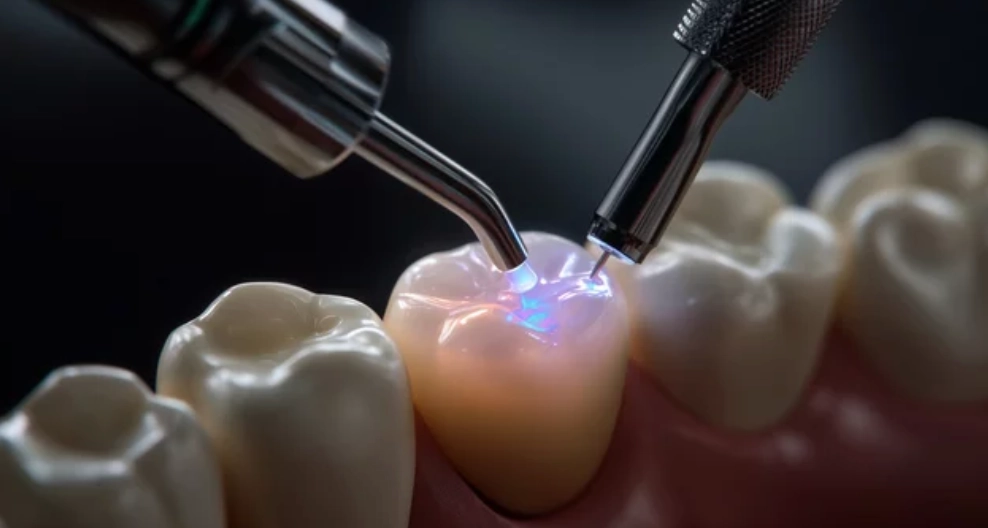
Root canal treatment saves a tooth whose nerve, the pulp, is inflamed or infected. The dentist removes the damaged pulp, cleans and disinfects the canals inside the root and seals them, and the tooth is then protected with a filling or a crown. It is done under local anaesthetic, usually in one or two visits. At Platinum Medical Center in Lusail, the tooth is assessed with X-rays, or a 3D scan where needed, and with a good final restoration a treated tooth can last for many years.

Treats
Inflamed or infected pulp from deep decay, a crack or an old injury
Your dentist
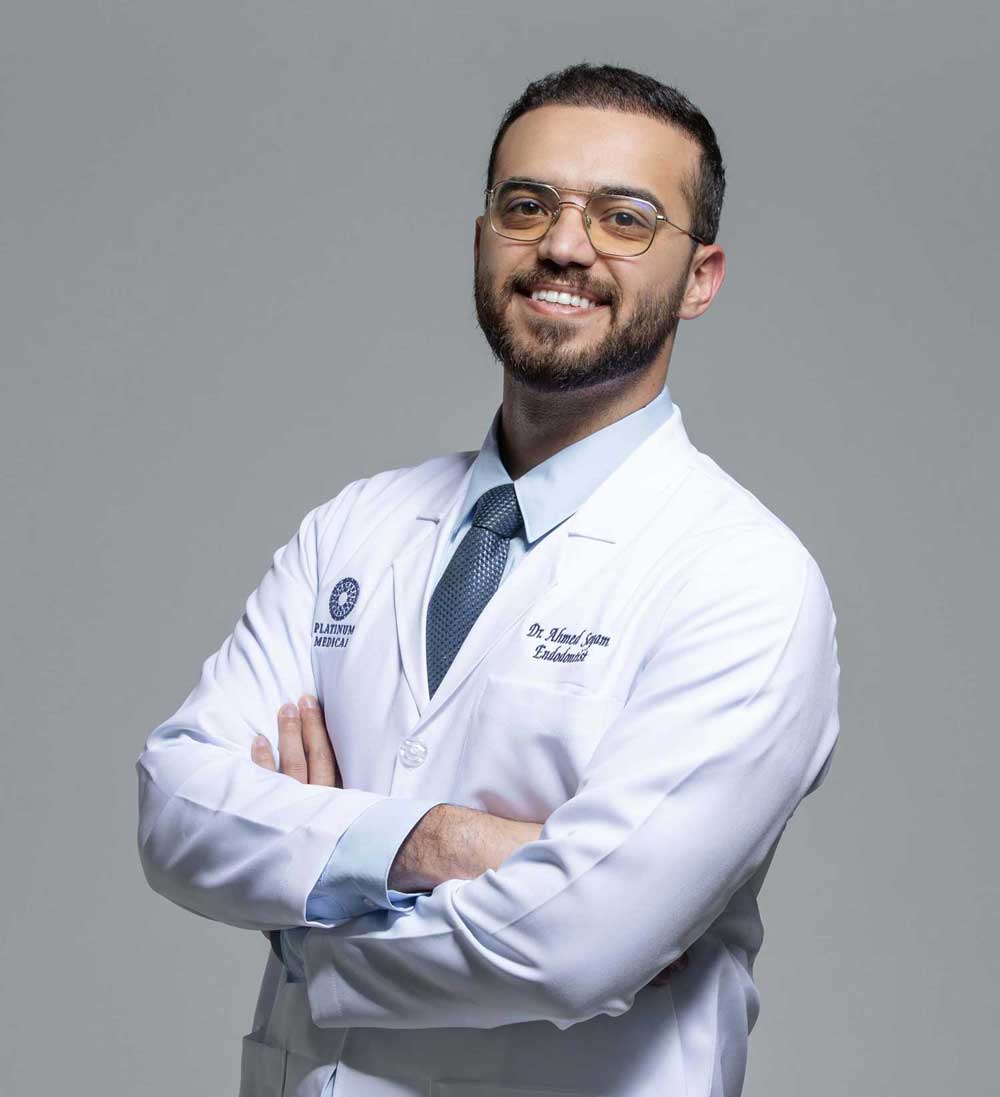
Dr. Ahmed Wael Seyam, specialist member of the European Society of Endodontology
Comfort
Local anaesthetic; it should feel much like having a filling
Visits
Usually one or two, each about 1 to 2 hours
Afterwards
Tenderness for a few days, usually eased by standard painkillers
Protection
A filling or a crown, depending on how much tooth remains
If symptoms return
Retreatment can often still save the tooth
Where
17th Floor, QIG Tower, Lusail, for patients across Lusail, Doha and Qatar

Medically reviewed by Dr. Ahmed Wael Seyam, Cosmetic & Restorative Specialist ·

Our approach

A Tailored Approach

We begin with a structured assessment — symptoms, clinical tests, and imaging when indicated. Your plan is tailored to the tooth, the level of infection, and your comfort. If a tooth has been treated before and symptoms return, explore root canal retreatment.

Signs

Do I need a root canal?

Symptoms vary — some teeth are painful, others are silent. We recommend assessment if symptoms persist or recur.

  • Pain when biting or chewing
  • Sensitivity to hot or cold that lingers after the drink has gone
  • Throbbing toothache, or pain that wakes you at night
  • Swelling, tenderness, or a gum ‘pimple’ (possible abscess)
  • Deep decay or a cracked tooth
  • A tooth that has darkened after a knock

Symptoms alone cannot confirm that a root canal is needed: tests and X-rays show which tooth is responsible and whether it can be restored. If you’re unsure, start with a general dentistry assessment.

Your options

Root canal treatment and the alternatives

Saving the tooth is usually the first aim, but not every tooth should be saved. Your dentist explains which option suits the tooth after the assessment.

I

Root canal treatment

A root canal treats the inside of the tooth (the pulp and canals). We remove inflamed or infected tissue, disinfect the canals, then seal the tooth to reduce the risk of reinfection — so you can keep your natural tooth.

SuitsA restorable tooth with an inflamed or infected nerve

II

Root canal retreatment

If a tooth treated before becomes painful or infected again, the old root filling can be removed and the canals cleaned, disinfected and sealed again. Read more about root canal retreatment.

SuitsA previously treated tooth whose symptoms return

III

Root-end surgery

When the infection at the tip of the root cannot be reached through the tooth, it can be treated through the gum in a minor procedure called an apicoectomy, and the root end is sealed.

SuitsPersistent infection after treatment, where retreatment is not possible

IV

Extraction and replacement

When a tooth cannot be restored, for example with a vertical root fracture or too little tooth left, removing it and replacing it with an implant, bridge or denture may be the better plan.

SuitsA tooth that cannot be saved or restored

Antibiotics can help control a spreading infection, but they do not treat an infected tooth: the source of the infection has to be removed.

Compare

Root canal or extraction?

A restorable natural tooth is often worth preserving, but not every tooth should be saved. A vertical root fracture, severe structural loss, poor gum support or an impossible final restoration can make extraction more sensible.

Keeps the tooth

Root canal treatment

Your tooth
Kept, with its natural root
Visits
Usually one or two, then a filling or crown
Afterwards
Tender for a few days
Chewing
Natural feel and bite once restored
Next step
A filling or crown to protect the tooth
Removes the tooth

Extraction

Your tooth
Removed
Visits
Usually one, then healing
Afterwards
A few days of healing; the gap needs a plan
Chewing
Depends on how the gap is replaced
Next step
An implant, bridge or denture, which adds time and cost

Read the root canal assessment, stages and aftercare guide, or about tooth extractions.

The best tooth is still your own.

The journey

What happens during root canal treatment?

Most root canal treatments take one or two visits. Teeth with several or curved canals, or with a large infection, can need more. Your dentist gives you a plan after the assessment.

  1. Root canal assessment with tests and X-rays First visit

    Assessment and X-rays

    Your dentist examines the tooth, tests how it responds to cold and tapping, and takes X-rays, or a 3D scan where needed, to find the cause and check that the tooth can be restored.

  2. Root canal treatment under local anaesthetic Start of treatment

    Numbing and protecting the tooth

    Local anaesthetic numbs the area. A thin rubber sheet, called a dental dam, isolates the tooth to keep it clean and dry while the dentist works.

  3. Cleaning and shaping the root canals About 1 to 2 hours

    Cleaning and shaping the canals

    Treatment is performed with careful isolation, cleaning and shaping of canals, then sealing. Some cases require more than one visit depending on complexity and infection level.

  4. End of treatment

    Sealing the canals

    The clean canals are filled and sealed to stop bacteria getting back in. If a second visit is needed, a medicine is placed inside the tooth and closed with a temporary filling in between.

  5. Crown or filling to protect a root canal treated tooth Within a few weeks

    Protecting the tooth

    A permanent filling or a crown is fitted to protect the tooth and seal it against new bacteria.

  6. Review after root canal treatment Months later

    Review

    Healing around the root is checked at a later review, often with an X-ray. The bone around an infected root can take several months to heal.

Comfort and recovery

Is a root canal painful?

Root canal treatment is done under local anaesthetic, so it should feel much like having a filling, and it usually relieves the pain the infection was causing. Afterwards the tooth can feel tender for a few days, which standard painkillers usually ease.

I

The first hours

Your lip and cheek may stay numb for a few hours, so avoid hot drinks and chewing until the numbness wears off.

II

The first few days

Mild tenderness is common for a short period. We’ll guide you on chewing, hygiene, and when to return if symptoms persist. Paracetamol or ibuprofen usually helps, if they are suitable for you.

III

Until the final restoration

Avoid hard chewing on the tooth until it is restored, keep your brushing and flossing routine consistent, and return for review if swelling or pain increases.

Swelling or pain that gets worse rather than better, or a temporary filling that comes out, needs a review.

Protecting the tooth

Do I need a crown after a root canal?

After a root canal, the tooth often needs a protective restoration. Your dentist will advise whether a filling is sufficient or a crown is recommended based on remaining tooth structure and bite forces.

Back teeth that have lost a lot of structure usually need a crown, because they take the heaviest biting forces. Front teeth with little damage can often be restored with a filling. The final restoration should be completed promptly, because a temporary filling is not designed to last.

For restoration, explore dental crowns and composite filling.

Longevity

How successful is root canal treatment?

Most root canal treatments succeed, and a tooth that is well restored and cared for can last for many years, often for life. Success is more likely when the infection is treated early, the canals are thoroughly cleaned and sealed, and the tooth is protected with a well-fitting filling or crown.

If symptoms return, the tooth can often still be saved with root canal retreatment. Regular check-ups and hygiene visits help find problems early.

Safety

Risks and how they are managed

As with any dental treatment, root canal treatment carries some risks, which your dentist explains before you start. The tooth may stay tender for longer than expected; the infection can persist or return, especially if the tooth is not restored promptly; and occasionally a fine instrument separates inside a narrow canal, or a crack is found that means the tooth cannot be saved. A tooth weakened by decay can also break before it is protected with a crown.

A careful assessment, isolation of the tooth during treatment and a prompt final restoration reduce these risks.

Urgent care

When to seek urgent care

A suspected dental abscess needs urgent dental assessment. Difficulty breathing or swallowing requires emergency medical attention; do not wait for a routine booking.

For severe toothache or swelling, see emergency dentist and toothache, or read the dental emergency guide.

Your treatment plan

What affects the cost of a root canal in Qatar?

Root canal treatment is planned for each tooth, so the fee depends on what that tooth needs. You receive a personalised treatment plan, including fees, after your assessment.

  • Which tooth it is: front teeth usually have one canal, molars three or more
  • Whether it is a first treatment or a retreatment
  • The number of visits, and any 3D imaging needed
  • The final restoration: a filling, or a crown and any post
  • Treatment of a spreading infection first, if needed

Many insurance plans cover part of root canal treatment, so it is worth checking your policy before you start.

Your assessment

Questions for your root canal assessment

I

Can this tooth be restored?

Ask what the assessment shows about the tooth and its long-term restoration.

II

What alternatives apply?

Discuss the benefits, limitations and risks of the options appropriate to your tooth.

III

How many visits might be needed?

Ask about treatment stages, temporary fillings and completion appointments.

IV

Will a crown or other restoration be required?

Clarify how the tooth will be protected after treatment and when this should be completed.

Your specialist

Your dentist

Dr. Ahmed Wael Seyam, Cosmetic and Restorative Specialist at Platinum Medical Center

Cosmetic & Restorative Specialist

Dr. Ahmed Wael Seyam

Dr. Ahmed carries out root canal treatment at Platinum and restores the tooth afterwards, so the treatment and the final filling or crown are planned together.

  • European Master’s Degree, Universitat Internacional de Catalunya, Barcelona
  • Specialist member of the European Society of Endodontology
  • Course in pain and abscess control in endodontics, Qatar, 2018
  • At Platinum Medical Center in Lusail since 2022

View Dr. Ahmed’s profile

Questions

Root canal treatment FAQ

Is a root canal painful?

It is done under local anaesthetic, so it should feel much like having a filling, and it usually relieves the pain the infection was causing. The tooth can feel tender for a few days afterwards.

How many visits does a root canal take?

Usually one or two. Teeth with several or curved canals, or with a large infection, can need more. If a second visit is needed, the tooth is closed with a temporary filling in between.

How long does a root canal appointment take?

Usually about 1 to 2 hours, depending on the tooth and how many canals it has.

Do I need a crown after a root canal?

Often, especially for back teeth, which take the heaviest biting forces and have usually lost a lot of structure. Front teeth with little damage can often be restored with a filling. Your dentist advises based on how much tooth remains.

How long does a root canal-treated tooth last?

With a good filling or crown and regular check-ups, a treated tooth can last for many years, often for life.

Is it better to have a root canal or an extraction?

If the tooth can be restored, keeping it is usually the better option: it preserves your natural bite and avoids the time and cost of replacing the tooth. If it cannot be restored, extraction and a replacement such as an implant may be the better plan.

Can antibiotics cure an infected tooth?

No. Antibiotics can help control a spreading infection, but the source of the infection is inside the tooth and has to be removed with root canal treatment or an extraction.

What happens if I delay root canal treatment?

The infection can spread to the bone around the root and form an abscess, the pain can get worse, and the tooth may become too damaged to save.

Can I eat after a root canal?

Wait until the numbness wears off, then eat soft foods and chew on the other side until the tooth has its final filling or crown.

What is root canal retreatment?

If a treated tooth becomes painful or infected again, the old root filling can be removed and the canals cleaned, disinfected and sealed again. Retreatment can often still save the tooth.

Why can a tooth turn dark after a root canal?

A tooth can darken after its nerve dies or after treatment. Internal whitening can lighten it from the inside, or a veneer or crown can match it to its neighbours.

What should I do if my face swells after treatment?

Some tenderness is normal, but swelling that grows, pain that gets worse or a fever needs a prompt review. Difficulty breathing or swallowing needs emergency care straight away.

Further reading

Read more before your assessment

Private consultation

Begin with a root canal assessment in Lusail

Prefer guidance? Book a consultation and we’ll assess your symptoms and recommend the right plan — treatment, restoration, or further evaluation.

Platinum Concierge — seamless booking, discreet care, refined outcomes.

Doctor-led dentistry, dermatology & aesthetics — crafted in Lusail with calm precision.

© 2026 Platinum Medical Center.