


Forehead lines
The horizontal lines that appear when you raise your brows. The forehead muscle also lifts the brows, so it is treated lightly and in balance with the area between them, to avoid a heavy or flat brow.
Natural movement. Softer lines. Calm confidence.
Doctor-led Botox designed to soften expression lines while keeping your features balanced. Planning is proportion-first — always aiming for a natural finish.
The essentials
Botox is a purified protein injected in tiny amounts into selected muscles to relax them, which softens the lines that movement creates: forehead lines, frown lines between the brows and crow’s feet around the eyes. It can also slim a wide jaw, ease clenching and reduce excessive sweating. At Platinum Medical Center in Lusail, your dermatologist assesses how your face moves before deciding on any dose, so expression stays natural. Treatment takes about 10 to 20 minutes, there is no downtime, the effect appears over 2 weeks and it usually lasts 3 to 4 months.
Our approach
We assess facial movement, symmetry, and your preference (subtle softening vs more noticeable smoothing) — then tailor dosing and placement to keep expression natural. Results develop over days and typically last for months, with maintenance discussed based on your goals.
Discuss the facial movements and lines that concern you, the result you want, your medical history, current medicines and any previous injectable treatment. Botox reduces activity in selected muscles; it does not replace lost volume in the way dermal fillers can.
Ask about expected effects, aftercare and possible complications, including bruising, swelling or less common effects such as eyelid or brow drooping. Your clinician should explain suitability and alternatives before you decide.
Read our Botox guide to suitability, treatment areas and natural movement.
Treatment areas
Botox works on lines and concerns caused by muscle activity. Treatment areas depend on anatomy and goals; your doctor advises what is appropriate, conservative and balanced for your features.
The horizontal lines that appear when you raise your brows. The forehead muscle also lifts the brows, so it is treated lightly and in balance with the area between them, to avoid a heavy or flat brow.
The vertical “11” lines between the brows, which can make you look tired, cross or tense. They are often the first area people treat.
The fan of lines at the outer corners of the eyes when you smile. A light treatment softens them while keeping a natural smile.
A few carefully placed units can lift the tail of the brow slightly or help balance an uneven brow, in selected cases.
In selected protocols: a gummy smile, fine lines above the lip, a dimpled chin, downturned mouth corners and vertical neck bands (platysmal bands). These areas need precise, conservative dosing.
Treating the masseter muscles can slim a wide, square jaw over 6 to 8 weeks and ease jaw clenching and teeth grinding. For grinding, see Botox for bruxism.
In selected cases, Botox can be used to reduce excessive sweating by blocking nerve signals to sweat glands. Suitability depends on medical history and symptom severity. Underarms are the most common area; hands and feet in selected cases. See hyperhidrosis treatment.
Lines that are visible when your face is at rest, deep folds and hollows are often better treated with, or alongside, other options; your doctor explains which. Looking for volume or contour support? Explore fillers and skin boosters.
How it works
Botox relaxes targeted muscles to soften the look of expression lines while preserving natural movement. Your plan is personalised after assessing facial dynamics and symmetry.
Tiny amounts are placed into the muscles that crease the skin. They block the nerve signal that tells those muscles to contract, so they move less.
With less repeated folding, expression lines soften. Lines caused by movement respond best; lines already etched at rest improve more gradually.
Over 3 to 4 months the nerve endings recover and movement returns gradually. Nothing is permanent, so the plan can be adjusted at each visit.
A Platinum example
Platinum’s clinic post shows Botox treatment for lines around the eyes, performed by Dr. Anas Rai.
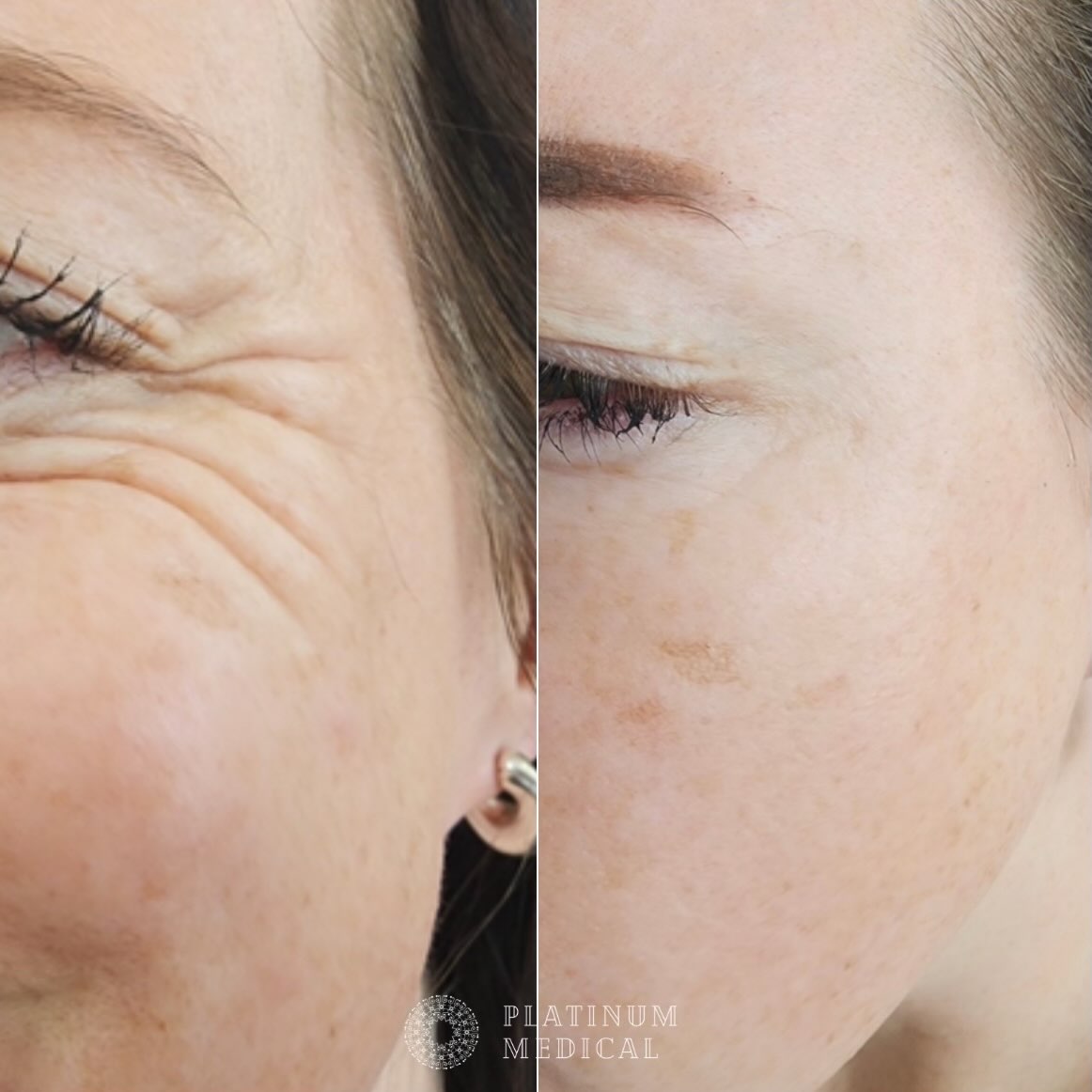
This is one individual example. Your consultation should cover suitability, realistic changes and follow-up; results vary.
Compare
They do different jobs, which is why many plans use more than one. Botox relaxes movement; fillers restore volume; boosters improve the skin itself.
The goal is not zero expression. It is the right amount of relaxation in the right anatomy.
The visit
From the first consultation to your review, here is what to expect.
 First visit
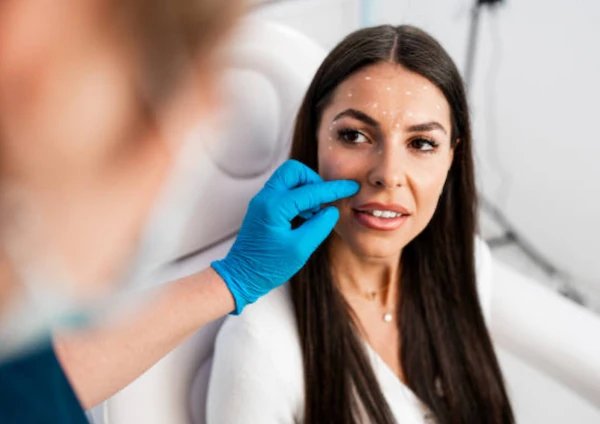
Your doctor watches how your face moves when you frown, raise your brows and smile, checks your brow position and symmetry, and asks about your medical history, medicines and any previous treatment. You agree the areas, how much movement to keep and what to expect, and photographs are taken for your records.
Tell your doctor about any medicines or supplements that make you bruise more easily; never stop a prescribed medicine on your own. Arrive without make-up if you can, and if you have an important event, treat at least two weeks before it.
 About 10 to 20 minutes
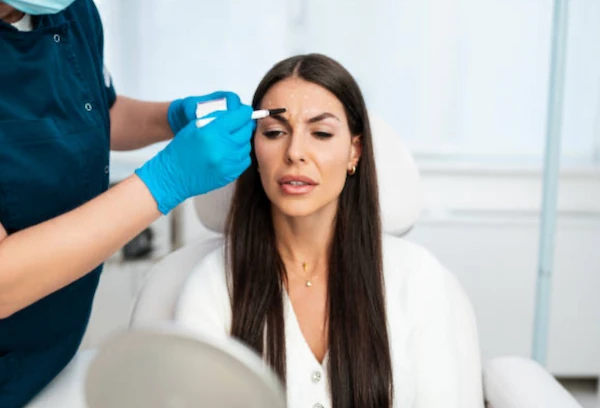
The skin is cleaned and the points are marked. Your doctor injects very small amounts with a very fine needle; most people feel a brief pinch at each point. You can usually go straight back to work or your day.
 The first day
Stay upright for about four hours and do not rub or massage the treated areas. Skip strenuous exercise, saunas and hot rooms until the next day. Small bumps or redness fade within an hour or so; a pinpoint bruise can be covered with make-up later the same day. Follow the instructions given for your treatment rather than a general online timetable.
The effect builds over 2 weeks. Your doctor reviews the result then, and makes a small adjustment if one side or area needs it. Your dose is recorded, so future treatments can be fine-tuned to how your face responded.
Results
Movement starts to soften. Some areas, such as frown lines, respond a little faster than others.
The full effect is visible. This is when your doctor reviews you and fine-tunes if needed.
Movement returns gradually. The jaw often lasts 4 to 6 months and sweating treatment usually 6 months or more. With regular treatment, some people find the effect lasts a little longer.
Treatments are usually spaced at least 3 months apart. There is no need to treat again before movement has started to return.
Natural results
A natural result comes from assessment, placement and conservative doses, not from a different product.
The term describes a lighter, more conservative dose rather than a different product. It keeps more movement and suits first-timers and people who want subtle softening; the effect may be lighter or shorter.
Some people in their twenties and thirties treat lines that appear only with movement, before they become etched at rest. Your doctor advises whether it is worth it for you.
Men often have stronger muscles and may need a larger dose. The plan keeps a natural, masculine brow rather than a high, arched one.
Suitability
Usually suitable
Wait, or choose another option
No one under 18 is treated.
Safety
Small bumps, redness, tenderness or a pinpoint bruise at the injection points are common and settle quickly. A mild headache in the first day or two can occur. Less often, the brow or an eyelid can feel heavy or droop, or the result can be uneven; these effects are temporary and usually settle over a few weeks, and unevenness can often be corrected at your review. Dry or watery eyes, and allergic reactions, are uncommon. Serious effects beyond the treated area are very rare at cosmetic doses.
Careful assessment, conservative doses, precise placement, a record of every treatment and a review at about two weeks keep these risks low. Before treatment, ask what you should avoid afterwards, when to resume exercise, when to assess the result and who to contact if you have a concern. Seek help urgently for difficulty swallowing, speaking or breathing.
Your plan
Botox is planned around your face, so the fee depends on the areas and the dose. You receive a personalised treatment plan, including fees, after your assessment.
Insurers usually treat cosmetic Botox as cosmetic; treatment for excessive sweating may be assessed differently, so check your policy.
Your consultation
Discuss the expressions you want to preserve and the lines you want assessed.
Placement depends on the assessed muscles and nearby structures.
Ask which product is proposed; units from different products are not interchangeable.
Agree how your response will be reviewed before considering further treatment.
Your specialist
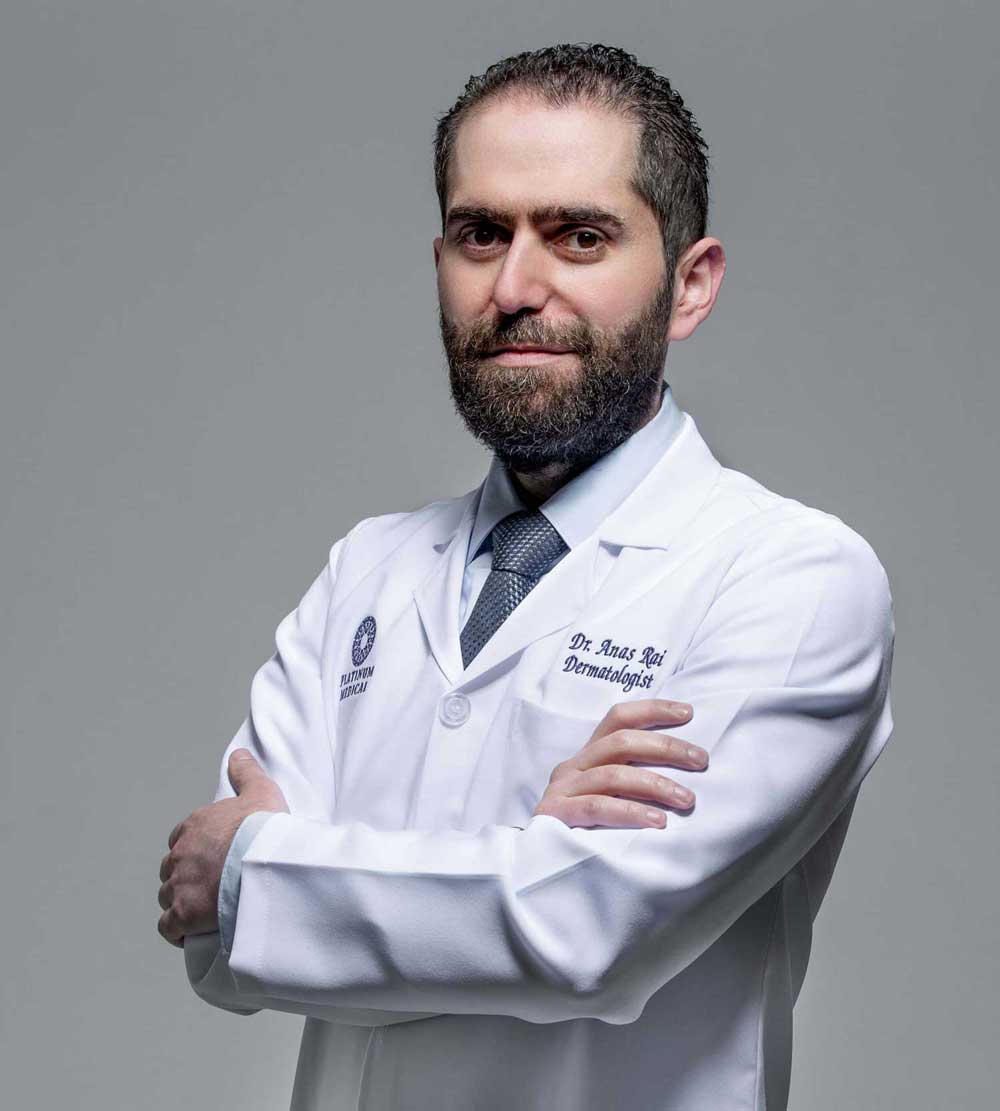
Medical Director & Specialist Dermatologist
Dr. Anas assesses your face and plans each treatment: which areas, how much movement to keep and when to review. He has more than 15 years of experience in dermatology across Syria and Qatar, including aesthetic treatments of the face.
Questions
Botox is a purified protein that relaxes the muscles it is injected into. In tiny amounts it softens lines caused by movement, such as forehead lines, frown lines and crow’s feet, and it is also used for a wide jaw, clenching and excessive sweating.
Usually 3 to 4 months for lines on the face. Jaw slimming often lasts 4 to 6 months and treatment for sweating usually 6 months or more. Movement returns gradually, so the result fades rather than stopping suddenly.
Movement starts to soften in 2 to 5 days and the full effect is visible at about 2 weeks, when your doctor reviews the result.
Most people feel a brief pinch at each point. The needles are very fine and the treatment takes only minutes, so numbing is rarely needed.
Usually none. Small bumps or redness fade within an hour or so. Stay upright for about four hours, do not rub the area, and skip strenuous exercise and saunas until the next day.
Not when the dose and placement are planned around how your face moves. The aim is the right amount of relaxation in the right muscles, so expression stays natural; your doctor can always add a little more at your review.
A lighter, more conservative dose rather than a different product. It keeps more movement and suits people who want subtle softening, although the effect may be lighter or shorter.
Yes, in selected cases. Treating the masseter muscles can slim a wide jaw over 6 to 8 weeks and ease clenching and grinding. Your doctor first checks that the width comes from muscle rather than bone or fat.
Yes, in selected cases. It reduces sweating by blocking the nerve signals to the sweat glands, most often in the underarms, and the effect usually lasts 6 months or more.
It depends on the line. Botox softens lines caused by movement; filler restores volume for folds and hollows. Many faces benefit from both, in different areas.
When movement has started to return, usually every 3 to 4 months, and not sooner than 3 months after your last treatment. Some people find they need it less often over time.
Small bumps, redness, a pinpoint bruise or a mild headache are common and short-lived. Less often, a brow or eyelid can feel heavy or the result can be uneven; these effects are temporary and usually settle over a few weeks.
Treatment is postponed in pregnancy and breastfeeding and while there is an infection in the area. Some nerve and muscle conditions and certain medicines need discussing with your doctor first. No one under 18 is treated.
The fee depends on the areas treated, the dose your muscles need and how often you maintain the result. You receive a personalised treatment plan, including fees, after your assessment.
Further reading
Private consultation
Prefer guidance? Book a consultation and we’ll recommend the safest plan around your goals.

Doctor-led dentistry, dermatology & aesthetics — crafted in Lusail with calm precision.


