


Underarm Sweating (Most Common)
Underarm hyperhidrosis is one of the most common presentations. In selected cases, a targeted plan can reduce sweating with minimal disruption to routine.
UsuallyInjections, after antiperspirants
Calm control — without disruption.
Hyperhidrosis is excessive sweating that can affect daily comfort and confidence. Treatment is tailored to the area and severity. In selected cases, it may use targeted injections to reduce sweating by blocking nerve signals to sweat glands.
Suitability depends on medical history and symptom severity. Your doctor will advise the safest approach.
The essentials
Hyperhidrosis is sweating that is heavier than the body needs, usually in the underarms, hands, feet or face. It can soak clothes, make it hard to hold a pen or shake hands, and affect confidence. At Platinum Medical Center in Lusail, a specialist dermatologist confirms the type and cause, then plans treatment: strong antiperspirants and prescription creams first, then anti-sweat injections, which block the nerve signals that switch on the sweat glands in the treated area. The injections take about 30 to 45 minutes, start working within 3 to 7 days and usually keep the area much drier for 4 to 6 months, often longer in the underarms.
Our approach
Heavy sweating has more than one cause, so the first step is finding out which kind you have.
We begin with an assessment to confirm the pattern (primary vs secondary causes), triggers, and impact on daily life. Your clinician will then recommend options, session planning, and realistic timelines.
Areas treated
Primary hyperhidrosis usually affects one or two areas, on both sides of the body.
Underarm hyperhidrosis is one of the most common presentations. In selected cases, a targeted plan can reduce sweating with minimal disruption to routine.
UsuallyInjections, after antiperspirants
Sweaty palms can affect work and social confidence. Your doctor will advise suitability and what to expect in terms of comfort and daily function.
UsuallyInjections with numbing
For foot sweating in selected cases, a tailored plan may reduce sweating and improve comfort — especially when symptoms impact footwear and daily activity.
UsuallyInjections, with footwear advice
Sweating of the forehead, scalp or upper lip can be treated in selected cases, with small amounts placed carefully so facial movement is not affected.
UsuallySelected cases only
How it works
Treatment moves step by step, from the simplest options to injections.
Most people with underarm or hand sweating choose injections once antiperspirants have not helped enough.
Compare
Each option suits a different level of sweating, and they can be combined.
The aim is not to stop you sweating. It is to make one area dry enough to forget about.
The visit
From the first consultation to your review, here is what to expect.
 First visit
Your dermatologist asks where and when you sweat, what you have tried, and about your health and medicines, to tell primary hyperhidrosis from sweating caused by another condition, then explains the options, the number of sessions and the alternatives.
Avoid antiperspirant on the day, and tell your doctor about any medicines, especially those that thin the blood.
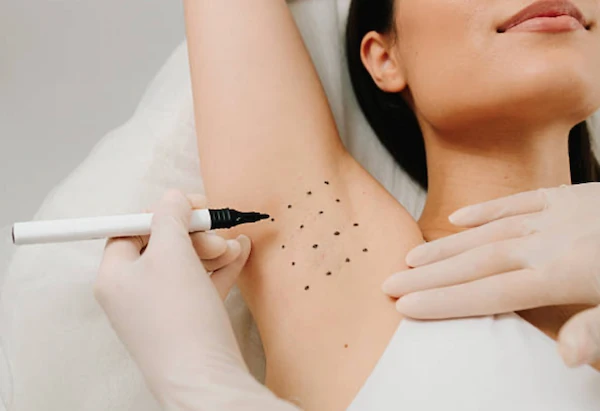 About 30 to 45 minutes
The area is cleaned and marked, and small injections are placed in a grid across the sweating area. The hands and feet are more sensitive, so numbing is used there.
 The first day
Aftercare is typically straightforward. We’ll advise what to avoid immediately after treatment, when to resume exercise, and when to review progress. Maintenance may be discussed depending on response.
Your doctor checks the result and treats any small areas that are still sweating. Most people return when sweating comes back, usually after 4 to 6 months.
Results
Sweating starts to fall within 3 to 7 days of the injections.
The full effect is reached, and most people find the treated area much drier.
Usually 4 to 6 months, and often longer in the underarms. The treatment is repeated when sweating returns.
Hyperhidrosis in Qatar
Everyone sweats more in a Qatar summer, but hyperhidrosis is different: it happens even in air-conditioning.
Suitability
Usually suitable
Wait, or see your doctor first
Sweating that starts suddenly in adulthood, at night or all over the body can have another cause, which your doctor checks before treatment.
Safety
The injections can cause small bruises, tenderness and brief stinging. In the hands, some people notice mild weakness of grip for a few weeks, which is why the amount is planned carefully. Allergic reactions and infection are rare.
Treatment is given by a doctor, with careful mapping of the area, the right amount for each site and a sterile technique. Tell your doctor if weakness or any unusual symptom develops.
Your plan
The fee depends mainly on the area and the amount of treatment it needs.
You receive a personalised plan, including fees, after your assessment. Some insurance policies cover treatment for severe hyperhidrosis, so check your policy.
Your consultation
Ask whether it is primary hyperhidrosis or sweating with another cause, and whether any tests are needed.
Ask whether antiperspirants or creams are worth trying first, or whether injections suit you now.
Agree when the result will be reviewed and when a repeat session is likely.
If your palms are treated, ask about numbing and the small chance of temporary grip weakness.
Your specialist

Medical Director & Specialist Dermatologist
Dr. Anas assesses the pattern and cause of your sweating and plans the treatment: whether antiperspirants, creams or injections suit you, which areas to treat and how often. He has more than 15 years of experience in dermatology across Syria and Qatar, including the treatment of hyperhidrosis.
Questions
For sweating of the underarms, hands or feet that does not improve with strong antiperspirants, anti-sweat injections are usually the most effective option. A dermatologist confirms the type of sweating first.
A purified protein is injected in tiny amounts just under the skin. It blocks the nerve signals that switch on the sweat glands in that area, so the area stays much drier for months.
Usually 4 to 6 months, and often longer in the underarms. The treatment is repeated when sweating returns.
Sweating usually starts to fall within 3 to 7 days, and the full effect is reached after about 2 weeks.
Most people feel small pricks. The underarms are usually comfortable; the hands and feet are more sensitive, so numbing is used.
Most people return to work the same day. Avoid strenuous exercise, saunas and massaging the area for 24 hours.
Yes. The underarms, hands and feet make only a small share of the body’s sweat, so the body still cools itself normally.
Yes. Palms respond well to injections. Numbing is used, and some people notice mild, temporary weakness of grip.
Yes, in selected cases. The feet are more sensitive, and the result can be shorter than in the underarms.
Primary hyperhidrosis has no underlying illness and often runs in families. Sweating can also be caused by hormones, some medicines or other conditions, which is why an assessment comes first.
This is uncommon after injections. It is mainly seen after surgery for sweating, which is a different treatment.
No. Injections are postponed during pregnancy and breastfeeding.
For mild to moderate sweating, clinical-strength antiperspirants used at night often help, and they are usually tried first.
The fee depends on the area treated and the amount of treatment it needs. You receive a personalised plan, including fees, after your assessment.
Further reading
Private consultation
Prefer guidance? Book a consultation and we’ll recommend the safest approach for your symptoms.

Doctor-led dentistry, dermatology & aesthetics — crafted in Lusail with calm precision.


