


Cysts & Lipomas
Cysts and lipomas may be removed when they cause discomfort, inflammation, or cosmetic concern. Your clinician will advise the safest technique and what to expect.
UsuallyRemoved whole to lower recurrence
Precision, calm, and clear aftercare.
Doctor-led minor dermatology procedures in selected cases — focused on safe technique, discreet healing, and clear follow-up. We assess the lesion first, then recommend the most appropriate approach.
The essentials
Minor surgery at Platinum Medical Center in Lusail removes small skin growths and treats minor problems under local anaesthetic, in a short clinic visit. A specialist dermatologist removes cysts, lipomas, moles and other skin lesions, and treats ingrown toenails, choosing the technique that leaves the neatest scar. Most procedures take 20 to 45 minutes and you go home the same day; stitches, if used, come out after 7 to 14 days. Removed lesions are sent to a laboratory for testing when needed, and you return for a review of the healing and the result.
Our approach
Not every lump needs removing, and the right technique depends on what it is and where it is.
We assess the lesion clinically, explain the options clearly, then remove it when appropriate — aiming for a clean outcome with calm aftercare.
Also relevant: skin tags & warts removal.
What we treat
These are the procedures most often done in the clinic.
Cysts and lipomas may be removed when they cause discomfort, inflammation, or cosmetic concern. Your clinician will advise the safest technique and what to expect.
UsuallyRemoved whole to lower recurrence
Moles, seborrhoeic keratoses and other lesions can be removed for comfort, appearance or testing; a changing or unusual mole is examined first.
UsuallyTested when needed
In selected cases, minor procedures can help relieve pain and reduce recurrence. We’ll guide you on wound care and prevention.
UsuallyThe nail edge is removed
A small sample of skin can be taken to confirm a diagnosis when a rash or lesion is unclear.
UsuallyResults usually within 1 to 2 weeks
Techniques
The technique is chosen for the type of lesion, its depth and where it is.
Lesions removed by excision or punch are usually sent to a laboratory, so you know exactly what they were.
Compare
These are the lumps and bumps most often removed; they feel different and are removed differently.
A good minor procedure is judged twice: by the laboratory result, and by how the scar looks a year later.
The visit
From the first consultation to your review, here is what to expect.
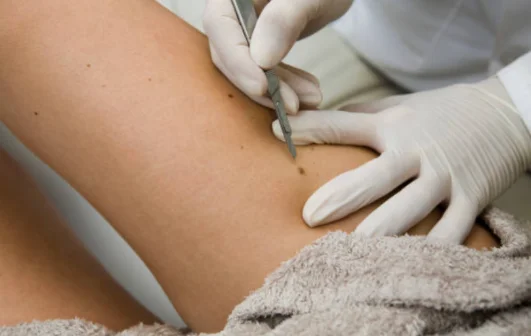 First visit
Your dermatologist examines the lesion, often with a dermatoscope, asks about your health, medicines and allergies, and explains whether removal is advised, the technique, the likely scar, the healing time and the alternatives.
Tell your doctor about blood-thinning medicines and any allergy to anaesthetic or dressings. Eat normally and wear clothing that leaves the area easy to reach.
 Usually 20 to 45 minutes
The area is cleaned and numbed with a local anaesthetic, so you feel pressure but no pain. The lesion is removed and the wound is closed or dressed.
 The first two weeks
Aftercare is usually simple. We’ll advise what to do at home, what to avoid, and when to return for review — especially if a staged plan is required.
Stitches are removed, the healing is checked and any laboratory result is explained.
Healing
Mild soreness and a little swelling are normal for a day or two, and simple pain relief is usually enough.
The wound has closed and stitches are removed. Light exercise can usually restart.
Scars are pink at first and fade over 6 to 12 months; sun protection and scar care help them settle.
Minor surgery in Qatar
Heat and sweat affect healing wounds, so a little planning helps.
Suitability
Usually suitable
Wait, or plan carefully
A mole that is changing in size, shape or colour, bleeds or looks different from your other moles should be examined promptly.
Safety
All surgery leaves a scar, although careful technique keeps it small and neat. Bruising, bleeding and soreness are common for a few days. Less often, a wound can become infected or open, a cyst can return if part of it remains, or a raised scar can form in people prone to keloids.
A sterile technique, removing cysts whole, choosing the right closure for each area, clear aftercare and a review visit keep these risks low. Contact the clinic if the wound becomes hot, swollen or very painful, or starts to discharge.
Your plan
The fee depends on the procedure and what it involves.
You receive a personalised plan, including fees, after your assessment. Insurance may cover removal for medical reasons but not for cosmetic ones, so check your policy.
Your consultation
Ask whether removal is advised, or whether monitoring is enough.
Ask about the size and position of the scar, and how to help it fade.
Ask whether the lesion will be sent to a laboratory and when the result will be ready.
Ask when you can shower, swim and return to sport for the area treated.
Your specialist
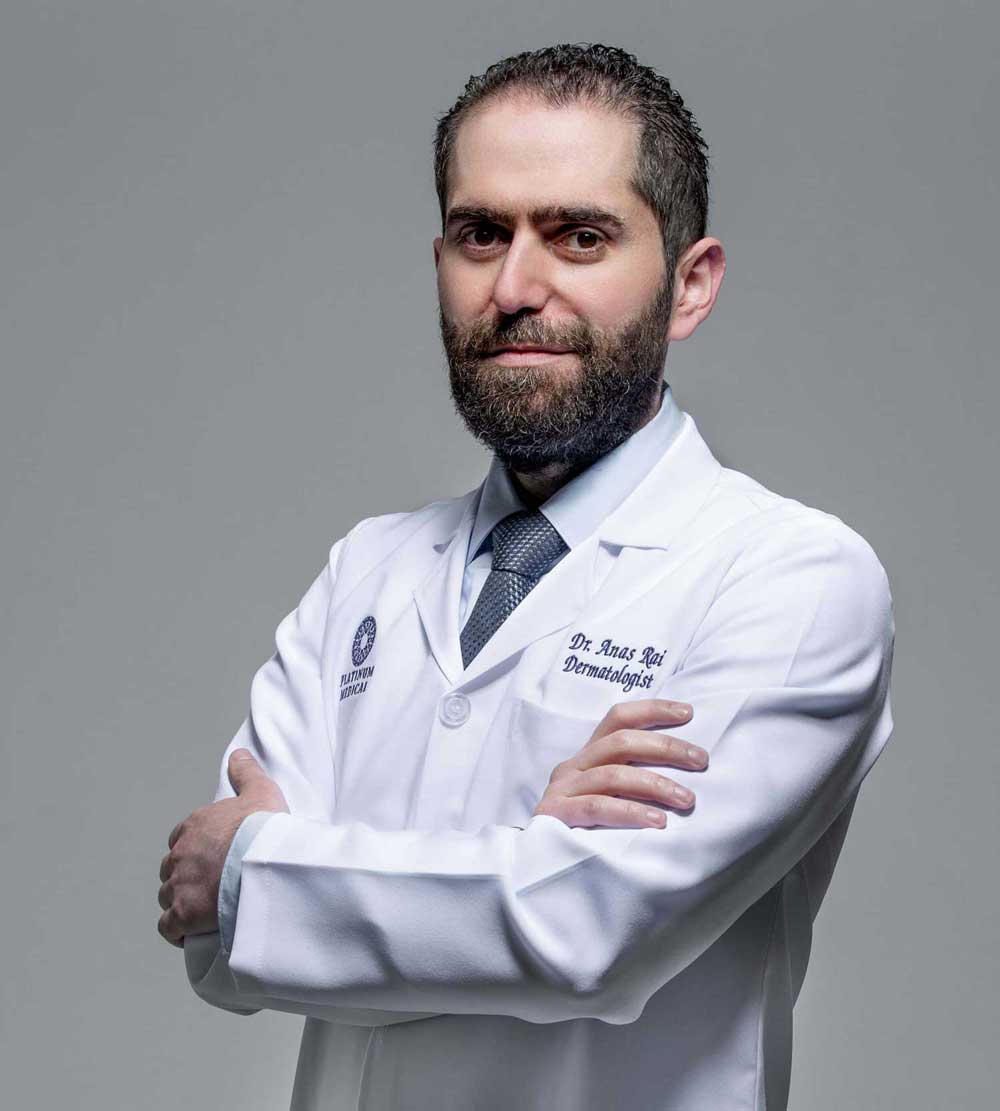
Medical Director & Specialist Dermatologist
Dr. Anas examines the lesion, decides whether and how to remove it, carries out the procedure and reviews the healing and any laboratory result. He has more than 15 years of experience in dermatology across Syria and Qatar, including minor skin surgery.
Questions
Short procedures under local anaesthetic to remove cysts, lipomas, moles and other skin lesions, take a skin biopsy or treat an ingrown toenail.
The local anaesthetic stings briefly, then the area is numb. You feel pressure but no pain during the procedure.
Usually 20 to 45 minutes, and you go home the same day.
Yes, any cut leaves a scar, but it is kept as small and neat as possible and fades over 6 to 12 months.
Usually after about 7 days on the face and 10 to 14 days on the body.
Rarely, if it is removed whole. Inflamed cysts are calmed first, so they can be removed completely later.
Yes, when needed. The tissue is sent to a laboratory, and the result is explained at your review.
Yes. Moles are removed for comfort, appearance or testing; a changing mole is examined first.
Yes. The edge of the nail that digs into the skin is removed under local anaesthetic and treated so it does not grow back.
You can usually shower after 24 to 48 hours. Avoid swimming, saunas and strenuous exercise until the wound has healed.
Usually not, as only local anaesthetic is used, unless the procedure is on your foot or near your eye.
Tell your doctor about all your medicines. Blood thinners are discussed first and are never stopped without medical advice.
Yes. Lipomas are removed through a small cut, usually when they are uncomfortable, growing or bothering you.
The fee depends on the type, size and number of lesions, and any laboratory testing. You receive a personalised plan, including fees, after your assessment.
Further reading
Private consultation
For assessment, book an appointment and we’ll recommend the safest approach for your case.

Doctor-led dentistry, dermatology & aesthetics — crafted in Lusail with calm precision.


