


Red and purple marks
New marks that are still active. They respond best to treatment, and early care can stop them becoming wide and white.
UsuallyTreated early for the best result
Staged improvement. Texture-first approach.
Stretch marks respond best to staged treatment plans. We tailor protocols based on mark type, area, skin tone, and sensitivity — with a doctor-led approach designed for gradual improvement.
The essentials
Stretch marks are lines that form when the skin stretches faster than it can adapt, during pregnancy, growth spurts, weight changes or muscle building. At Platinum Medical Center in Lusail, a specialist dermatologist treats them with microneedling, fractional laser and RF microneedling, chosen by the colour and age of the marks and your skin type. Newer red or purple marks respond best; older white marks improve more slowly. A course is usually 3 to 6 sessions 4 to 6 weeks apart, and the marks become softer, flatter and closer to your skin colour over 3 to 6 months, although they rarely disappear completely.
Our approach
Stretch marks are a change in the deeper layer of the skin, which is why creams alone rarely remove them.
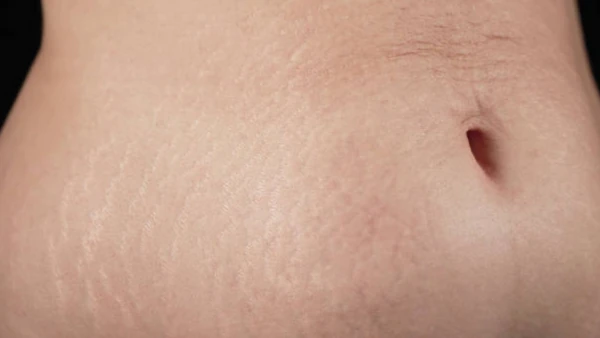
Stretch marks (striae) form when the skin stretches quickly — often with weight changes, puberty, pregnancy, or muscle gain. Early marks may appear red or purple, and later become lighter in tone. Treatment aims to improve the look of texture and blending over time.
Types of stretch marks
The colour of a mark shows how old it is, and that changes the treatment.
New marks that are still active. They respond best to treatment, and early care can stop them becoming wide and white.
UsuallyTreated early for the best result
Older marks that have matured. They are paler and often slightly sunken, and improve more slowly with treatments that rebuild collagen.
UsuallyA longer course
Marks on the abdomen, hips and breasts after pregnancy. Treatment starts once breastfeeding has ended and the skin has settled.
UsuallyAfter breastfeeding
Marks on the thighs, hips, back, arms and chest after growth spurts, weight changes or muscle building, common in both men and women.
UsuallyMicroneedling or laser
Treatments
Your plan usually combines treatments, adjusted to the colour of the marks and your skin type.
Microneedling supports collagen renewal and texture refinement over time. For facial collagen renewal, explore our dedicated microneedling page.
Usually3 to 6 sessions
In selected cases, energy-based protocols can support texture and tone. Where appropriate, options may include fractional laser — planned conservatively based on skin type and downtime preference.
UsuallySettings chosen by skin type
Fine needles deliver radiofrequency heat into the deeper skin, firming it and rebuilding collagen, with a lower risk of dark patches in darker skin; see RF microneedling (Infini).
UsuallyOften chosen for darker skin
We’ll guide you on post-treatment care and the simplest routine to protect comfort and results — including how to support hydration and barrier recovery between sessions.
UsuallyA simple routine between sessions
PRP can be added to microneedling in selected cases to support healing, and prescription creams can help newer red marks.
Compare
All three rebuild collagen in the marks; they differ in depth, downtime and the skin types they suit.
Stretch marks rarely disappear. With the right plan, they become much harder to see.
The visit
From the first consultation to the end of your course, here is what to expect.
 First visit
Your dermatologist examines the marks, their colour, depth and area, your skin type and any history of dark patches after treatment, then explains which treatment suits them, the number of sessions, the downtime and the alternatives.
Avoid tanning and strong sun on the area for 2 weeks, and stop exfoliating products a few days before. Tell your doctor if you are pregnant or breastfeeding.
 About 45 to 60 minutes
Numbing cream is applied for about 30 minutes, then the marks are treated with microneedling, laser or RF microneedling according to your plan.
 The first week
The area is red and may feel warm for 1 to 3 days, longer after deeper laser. Moisturise, avoid the sun, saunas and swimming for a few days, and wear loose clothing.
Sessions are repeated until the marks have improved enough, and your doctor reviews the result at the end of the course.
Results
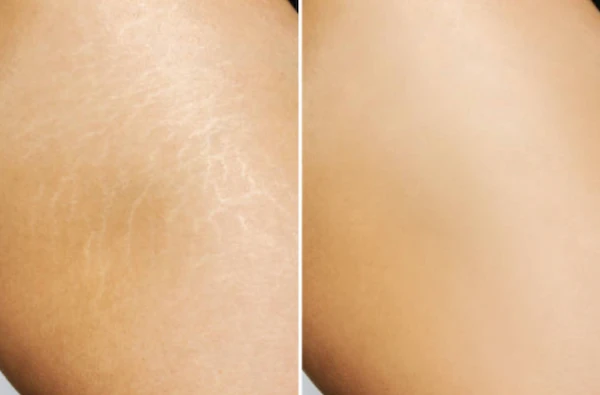
Red marks start to fade and the surface feels smoother after 2 to 3 sessions.
The marks become softer, flatter and closer to your skin colour, with the full result 3 to 6 months after the last session.
Treated marks stay improved, although new marks can form with future stretching.
Stretch marks in Qatar
Sun on freshly treated skin can cause dark patches, so timing matters in Qatar.
Suitability
Usually suitable
Wait, or choose another option
Sudden, wide or purple marks without a clear cause can be a sign of a hormonal condition, which your doctor checks first.
Safety
Redness, swelling and pinpoint marks are expected for a few days, and light crusting can follow laser. In darker skin, temporary dark patches can appear, especially if the area is exposed to sun. Infection and scarring are rare.
Choosing the right treatment and settings for your skin type, numbing, a sterile technique, sun protection and properly spaced sessions keep these risks low.
Your plan
The fee depends on the size of the area and the treatment chosen.
You receive a personalised plan, including fees, after your assessment. Insurers usually treat stretch marks as cosmetic, so check your policy.
Your consultation
Ask why one treatment is recommended over another for the colour and depth of your marks.
Agree the course, usually 3 to 6 sessions, and when the result will be reviewed.
Stretch marks improve but rarely disappear; ask what change is realistic for yours.
If you have darker skin, ask how the risk of dark patches is kept low.
Your specialist
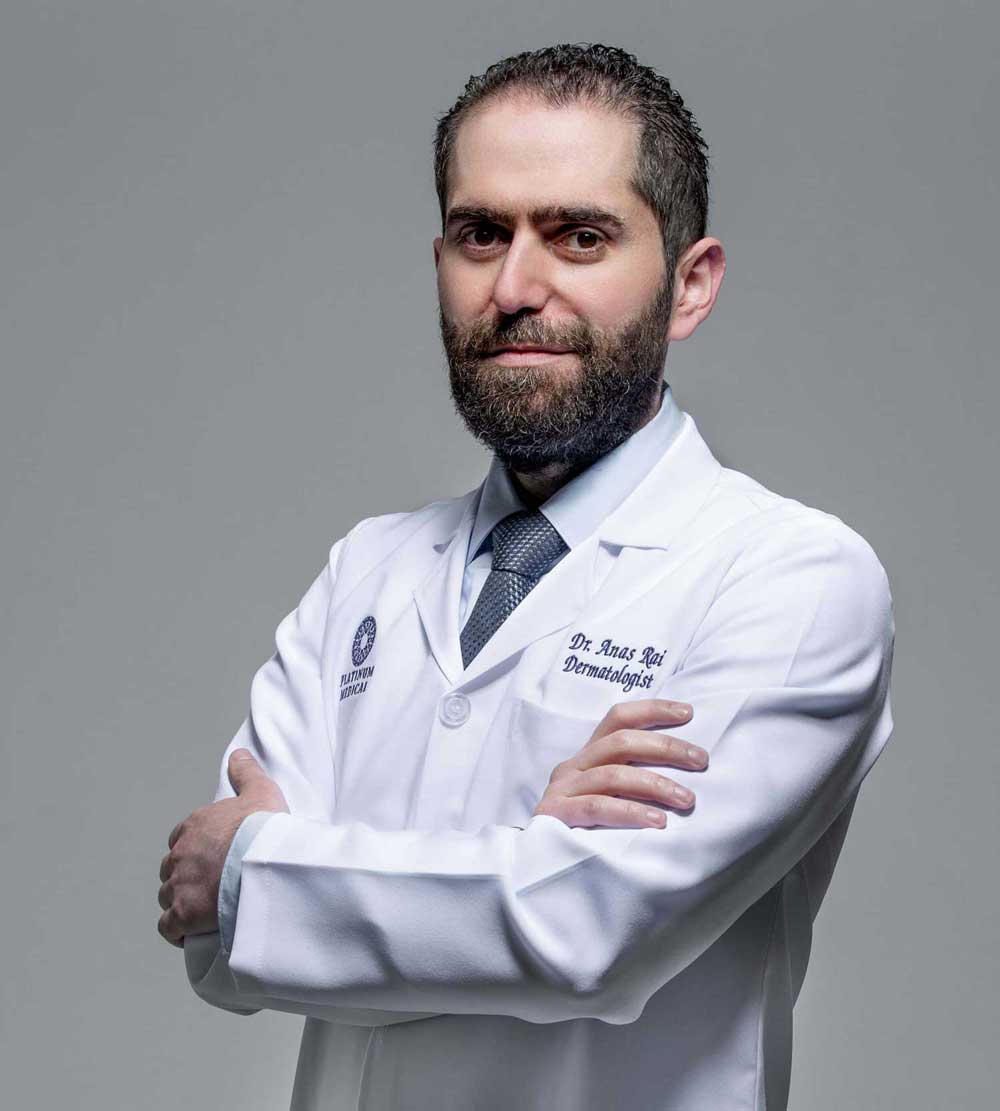
Medical Director & Specialist Dermatologist
Dr. Anas examines your marks and plans the treatment: which device to use, the settings for your skin type, how many sessions and whether to add PRP. He has more than 15 years of experience in dermatology across Syria and Qatar, including laser and microneedling treatments.
Questions
It depends on the colour and age of the marks and your skin type. Microneedling, fractional laser and RF microneedling all rebuild collagen in the marks, and your dermatologist chooses or combines them.
Rarely. Treatment makes them softer, flatter and closer to your skin colour, so they are much harder to see.
Red and purple marks, which are newer, respond best. White marks improve too, but more slowly and with more sessions.
Usually 3 to 6 sessions, 4 to 6 weeks apart, depending on the marks and the treatment.
Changes show after 2 to 3 sessions, and the full result develops over 3 to 6 months after the course.
Numbing cream is applied first, so most people feel heat or pricking that is easy to tolerate.
Usually 1 to 3 days of redness after microneedling, and up to a week after deeper laser.
No. Treatment starts after pregnancy and breastfeeding, when the skin has settled.
Creams can help early red marks a little and keep the skin moisturised, but they do not remove established marks.
Yes. Marks from growth spurts, weight changes and muscle building on the shoulders, arms, back and thighs are treated in the same way.
Yes, with the right treatment and settings. RF microneedling and gentler settings are often chosen to lower the risk of dark patches.
The abdomen, hips, thighs, buttocks, breasts, arms, shoulders and back.
Treated marks stay improved, but new marks can form with a future pregnancy, weight changes or growth.
The fee depends on the area, the treatment and the number of sessions. You receive a personalised plan, including fees, after your assessment.
Further reading
Private consultation
Prefer guidance? Book a consultation and we’ll tailor the safest plan for your mark type and skin.

Doctor-led dentistry, dermatology & aesthetics — crafted in Lusail with calm precision.


