


Contact sports
Football, rugby, basketball and handball can bring collisions with players, elbows or the ball.
UsuallyHigher risk
Dental protection for active lives
Platinum provides custom sports mouthguards following assessment of your teeth, bite and sporting activity. A properly fitted mouthguard helps reduce the risk of dental injury from an impact; it cannot prevent every injury.
Tell your dentist which sport you play, whether you wear braces and whether you have had previous dental injuries or restorations.
The essentials
A custom sports mouthguard is made from records of your teeth to help reduce the risk of dental injury from an impact during sport. At Platinum Medical Center in Lusail, the dentist first assesses your teeth, bite, sport and any braces or dental work, then has a guard made for your mouth and checks its retention and comfort at fitting, including how it feels when breathing and speaking. A well-fitted mouthguard reduces the risk of injury but cannot prevent every injury, and children’s guards need review as their teeth and jaws grow.
Our approach
The sport, your teeth and any braces decide the design.
Contact, collision and fall-related sports can put teeth at risk. Your dentist considers the activity, the condition of your teeth and any orthodontic appliances when discussing a suitable guard.
Sports
Any sport with collisions, equipment or falls can injure the teeth.
Football, rugby, basketball and handball can bring collisions with players, elbows or the ball.
UsuallyHigher risk
Hockey, cricket, padel and squash can bring strikes from a stick, ball or racket.
UsuallyImpact from equipment
Boxing, MMA, taekwondo and wrestling involve direct blows, and a guard is often required.
UsuallyOften required
Cycling, skateboarding, skating and horse riding carry a risk of falls onto the face.
UsuallyFalls
Braces, bridges and veneers can be damaged in an impact and need a design that allows for them.
UsuallyTell your dentist
Children’s growth and changing teeth affect fit, so their guards are reviewed more often.
UsuallyReview with growth
Types
How a guard is made decides how well it stays in place.
Records of your teeth are used to make the appliance for your mouth. At fitting, the dentist checks retention and comfort and discusses how it should feel during breathing and speaking.
Compare
Three appliances that look alike but serve different purposes.
A mouthguard reduces risk; it cannot remove it.
The visit
From the first assessment to regular checks, here is what to expect.
 First visit
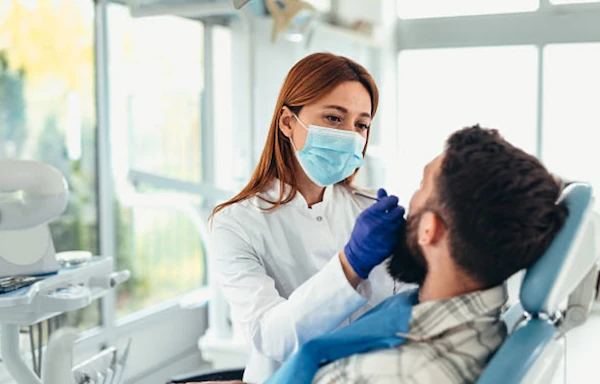
Your dentist examines your teeth, bite and any dental work, and asks about your sport and its level of contact.
Records of your teeth are taken so the guard can be made for your mouth.
The dentist checks that the guard stays in place and is comfortable, and shows you how to put it in, take it out and look after it.
Children’s growth, changing teeth and orthodontic treatment can affect fit. A mouthguard also needs review if it becomes worn, damaged or loose. Bring it to your dental appointment when its fit concerns you.
 After every use
Wear the guard during the activities for which it was recommended. Clean it as directed, let it dry and store it in a suitable protective case. Keep it away from heat that could alter its shape.
If an injury happens
Hold it by the crown, put it back in the socket or keep it in milk, and get dental help straight away.
Keep the pieces, rinse with water and call the clinic.
Seek dental assessment after an injury even if you wore your guard; see urgent dental assessment.
Sport in Qatar
Practical points for active families in Lusail and Doha.
Suitability
Recommended for
Discuss with your dentist
A mouthguard reduces risk but cannot eliminate it, and a dental injury still needs appropriate assessment.
Safety
A loose or worn guard protects less and can be uncomfortable or make breathing harder during sport. Chewing or cutting a guard changes its shape and fit.
Checking the fit before use, reviewing it during growth or orthodontic treatment, and replacing it when advised keep it working as intended.
Your plan
The fee depends on the assessment and the guard design.
You receive a personalised plan, including fees, after your assessment. Check your dental insurance policy for cover.
Your consultation
Ask how the sport and its level of contact affect the design.
Ask how the guard allows for braces and moving teeth.
Ask how it should feel when breathing and speaking.
Ask how often to have it checked, especially for children.
Your specialist

Cosmetic & Restorative Specialist
Dr. Ahmed assesses teeth and dental work for sport at Platinum, plans custom mouthguards, and checks their fit as your mouth changes.
Questions
A suitable design may be used with braces. Tell the dentist about your orthodontic treatment so fit and changing tooth positions can be considered.
No. A sports mouthguard is intended for impact protection. Night guards and splints are selected for other dental needs.
No. It reduces risk but cannot eliminate it. Dental injury still needs appropriate assessment.
A custom guard is made from records of your teeth, so it fits securely and lets you breathe and speak more easily than a loose, ready-made guard.
Contact, collision, combat, and stick or racket sports, and activities with a risk of falls onto the face.
Usually two: records of your teeth at one visit, and fitting at the next.
When it is worn, damaged or loose, and more often for children as their teeth change. Your dentist advises when.
Clean it as directed for its material, let it dry and store it in a protective case, away from heat.
Children in contact sports benefit from a guard, and growth means it needs regular review. Children are seen with a parent or guardian.
Mouthguards are designed to help protect the teeth and mouth; they have not been shown to prevent concussion.
Hold it by the crown, put it back in the socket or keep it in milk, and get dental help straight away.
No. Sports guards are designed for impact protection. Ask your dentist which appliance is appropriate.
A well-fitted custom guard should allow comfortable breathing during sport; tell your dentist if it does not.
The fee depends on the assessment and the guard design. You receive a personalised plan, including fees, after your assessment.
Further reading
Private consultation
Discuss your needs with Platinum’s dental team.

Doctor-led dentistry, dermatology & aesthetics — crafted in Lusail with calm precision.


